Get Full Government Meeting Transcripts, Videos, & Alerts Forever!
Get email alerts on the Pay And Benefits topic
No spam. Unsubscribe anytime.
Rappahannock school leaders weigh salary increases against steep health-insurance hikes; board to revisit budget March 30
Summary
Superintendent Dr. Grimsley and finance staff presented options to offset large health-insurance premium increases: a 6% teacher raise with employees absorbing insurance costs, or a 3% across-the-board raise aimed at protecting benefits. The board deferred a final budget decision to a March 30 work session.
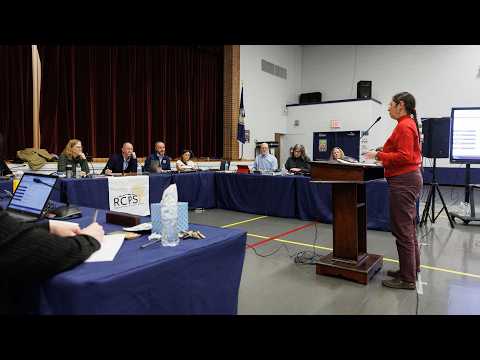
Rappahannock County school leaders told the joint meeting that rising health-insurance premiums threaten take-home pay for district employees and require trade-offs in the FY27 compensation plan.
"Health insurance companies' rates are increasing across the board," Superintendent Dr. Grimsley said, asking staff to model the effect on teachers, bus drivers and classified employees. Finance lead Stacy presented district data showing 115 staff on the district plan, roughly 16% enrolled in the high-deductible option and about 45 employees on family coverage — the group most exposed to premium increases.
Staff modeled two central scenarios. Option A would give teachers a 6% pay increase while passing the insurance premium increases through to employees; under that scenario many employees on Key Advantage plans could see biweekly take-home pay drop by tens to hundreds of dollars. Option B would reduce the teacher proposal to a 3% across-the-board increase to preserve employer contributions and blunt the immediate effect of higher premiums on the lowest-paid staff.
"If we level things out at 3%, then we have guarded or put that money to use to take care of the health-insurance increase that would impact them," Dr. Grimsley said. Board members and staff discussed mitigation tools such as HSA employer contributions, reinsurance for catastrophic claims and a small reserve to cover large outlier claims, while noting those approaches carry fiscal risk for a small division.
Board members voiced concern for bus drivers and classified staff, who could see the biggest percentage hit because their base wages are lower. Several supervisors suggested pursuing state funding streams and monitoring the state budget for additional school aid; staff said a flexible state allocation under discussion could provide an estimated $142,000 in one scenario.
No final budget was adopted. Multiple motions to set a bottom-line local transfer and adopt a budget implementing Option B were made, withdrawn or failed; the school board agreed to reconvene for a work session on March 30 to finalize the transfer request to the board of supervisors and to present more precise figures for any supplemental ask.