Get Full Government Meeting Transcripts, Videos, & Alerts Forever!
Get email alerts on the School Facilities topic
No spam. Unsubscribe anytime.
Schneider Electric briefs Rappahannock County on HVAC overhaul, says upgrades could cut utilities by about 20%
Summary
Schneider Electric told the Rappahannock County school board and supervisors that a design-build HVAC and lighting program could address deferred maintenance, improve classroom comfort and lower utility bills by roughly 20% (about $58,000 a year), with an estimated $1 million in lifecycle savings over 20 years.
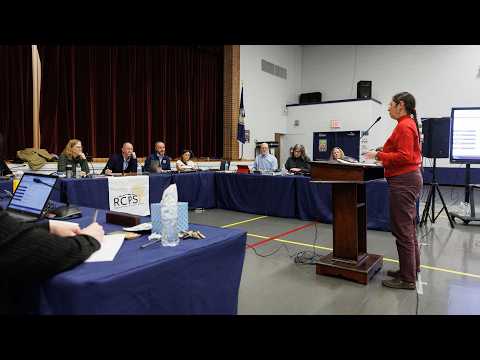
Schneider Electric representatives told a joint meeting of the Rappahannock County Board of Supervisors and the school board that the county’s schools face significant deferred mechanical maintenance and control-system failures and outlined a design-build approach to modernize heating, ventilation and air-conditioning systems.
"There is a decent amount of mechanical work that needs to be done across your facilities," Schneider presenter Abby Wigel said, identifying aging boilers, broken controls and inconsistent lighting as priorities. The firm recommended standardizing equipment and adding modern building controls to improve ventilation, reduce maintenance burden and provide more consistent classroom temperatures.
The presentation summarized an HVAC study and the company’s own site walkthroughs. Schneider estimated the division spends about $290,000 a year on utilities and projected roughly a 20% reduction in consumption — about $58,000 annually — through a mix of mechanical upgrades, lighting retrofits and building-automation measures. Over 20 years, with typical financing, the firm said districts often realize about $1 million in net savings.
Schneider described its preferred delivery method as a design-build contract that produces a single fixed-price agreement at the end of an investment-grade audit. "Rather than you needing to go out for procurement twice, you're going out for procurement once and finding a firm that's going to suit your needs and work with you throughout the entire process," Wigel said. The firm also offered an energy-performance contracting option with an annual measurement-and-verification protocol and a guarantee backed by shortfall payments if promised savings are not met.
School officials pressed for details about local contractors and past work. Staff and board members noted earlier contracts with Southern Air and Honeywell, and confirmed Titan (owner Corey) recently completed the high-school VRF project and has been providing responsive service under the current maintenance arrangement.
Schneider also flagged timing constraints: in a full-scope scenario the firm said lead times make a 2027 summer construction window more likely, though smaller, phased work could be scheduled earlier. The presenter emphasized training and community engagement as part of ongoing services, including K–12 STEM activities and staff training to maintain equipment.
The briefing was informational; no procurement decision was made. Board members said the presentation was useful as the county evaluates capital needs and possible funding sources, including a 1% sales-tax ballot measure under discussion at the state level.