Get Full Government Meeting Transcripts, Videos, & Alerts Forever!
Get email alerts on the Litigation topic
No spam. Unsubscribe anytime.
Starke County authorizes short-term legal payment after judicial-review filing
Summary
Commissioners agreed to an initial $5,000 authorization from a capital bucket (Q-cap) to cover early legal invoices after a petitioner filed for judicial review of a BZA decision; they flagged limits on which funds may be used and asked for regular invoice updates.
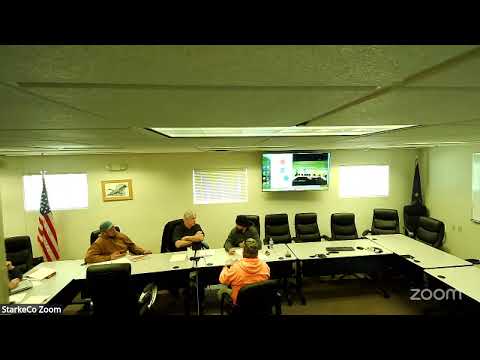
Starke County commissioners voted to authorize an initial payment from the county’s Q-cap account to cover early legal invoices after the county received a summons in a judicial-review case. John summarized the court filing: "the petitioner Amber Good has filed with the circuit court requesting judicial review of a BZA hearing involving Jeremiah Patrick," and said that the county’s usual legal fund does not cover the special litigation rate.
Commissioners debated whether the previously discussed solar-expenditure fund could be used. Staff read the solar fund ordinance’s approved uses and said litigation is not an explicitly listed use without updating the ordinance and coordinating with the county council. Justin, who the meeting identified as auditor, advised the board that whether a particular expense is allowable out of Q-cap or other buckets would require checking approved expenditures; the board agreed to monitor invoices monthly until the case is resolved.
The board’s interim approach is to authorize up to $5,000 from Q-cap to cover initial invoices from the attorney preparing the case; the litigation rate cited in the discussion was $250 per hour for matters outside the county’s typical legal fund coverage. Commissioners asked staff to return with invoice updates at subsequent meetings and to confirm the correct fund sources if the legal costs grow beyond the initial authorization.
Why it matters: The action ensures the county can respond to the pending judicial review while the board clarifies fund authority and avoids using restricted solar revenue without ordinance changes. The board did not adopt a long-term funding plan at this meeting; follow-up reporting and a formal vote by the county council may be required for larger expenditures.
Next steps: Staff will present updated invoices at future meetings; if costs exceed the Q-cap authorization, commissioners said they will reassign funding or return to the council for approval.