Get Full Government Meeting Transcripts, Videos, & Alerts Forever!
Get email alerts on the Towing Reform topic
No spam. Unsubscribe anytime.
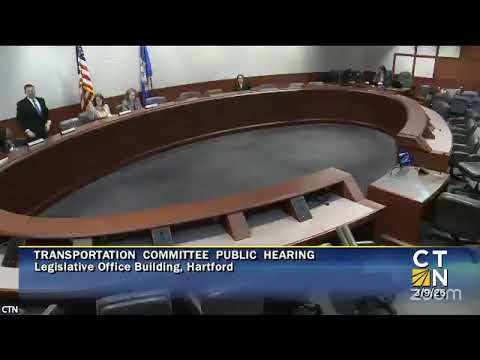
State committee hearing highlights towing reform, calls for clearer notice, funding and complaint limits
Summary
Lawmakers and agency officials debated HB 5465’s plan for a statewide ‘find my vehicle’ portal, updated notice rules and rates for non-consensual and police-ordered tows. Tow operators backed hourly rates and protections for heavy-duty tows; consumer advocates urged shorter complaint windows and better notice for owners. Lawmakers asked for more work on EV handling and storage, auctions and records retention.
Hartford — Lawmakers spent a long March hearing debating proposed reforms to Connecticut’s towing rules, focusing on consumer notice, how abandoned cars are handled, and how to compensate towers for complex, heavy-duty work.
The Department of Motor Vehicles told the Transportation Committee it supports a centralized online portal that would let vehicle owners locate towed cars and see auction notices. DMV Commissioner Tony Guerrera said the portal should reduce confusion and speed redemption, but his staff and carriers said operational details — especially how fast information must be uploaded and who must do it after hours — remain unresolved.
“An online ‘find my vehicle’ tool is an important consumer protection, but the timing and process matter,” Guerrera said in testimony. DMV also described plans for clearer, itemized invoices and for updating how vehicles are handled at auction so owners have a fair chance to reclaim property before it is sold.
Tow companies and industry working groups asked lawmakers to adopt new rates that reflect the reality of police-ordered and heavy-duty tows. Several operators said hourly billing and new storage rates are needed to cover long responses to major crashes, night work and specialized equipment for EVs. They also urged a state-administered reimbursement mechanism for police-ordered tows that yield no payment, which many towers said is a growing share of their workload.
“We clear the roadway after crashes and storms; we need a predictable way to recover costs for those public-safety missions,” said a representative of a towing association. Operators emphasized new costs tied to electric vehicles — isolation procedures, concrete ‘bunkers’ for EVs under thermal-watch, and longer storage — that they say the current rate structure does not account for.
Consumer advocates and legal-aid lawyers pressed for tighter protections for vehicle owners. They urged shortening the time a customer—or insurer—can bring complaints about a long-ago tow (many insurers currently file disputes years later), stronger notice rules so owners can realistically find and reclaim towed cars, and limits on how quickly towers may scrap or sell a vehicle. One proposed fix: allow owners who contact a tower within the early period to reclaim a vehicle at a fixed price, rather than facing escalating charges as storage accumulates.
Public-safety and traffic-safety issues also featured elsewhere in the hearing. AAA and the Connecticut Department of Transportation supported HB 5463 to expand distracted-driving rules and to increase penalties for using video-streaming devices in work zones; DOT warned that the state needs more flexibility on bus purchases to maintain service while transitioning to zero-emission fleets.
Several witnesses urged lawmakers not to treat a single solution as a silver bullet. On school-bus electrification, the Connecticut Green Bank and the state’s school-business association said the existing statewide targets require more funding and technical assistance. They supported a longer, phased schedule for converting fleets together with “braided” financing that combines federal grants, state dollars and long-term private capital so districts can spread costs across multi-year contracts.
Lawmakers closed the hearing by encouraging more stakeholder work on the complex points: how notice and portal workflows will operate without creating large after-hours burdens for small towers; how to set EV-specific storage and recovery fees; and how to protect consumers while making sure towers that perform high-risk, public-safety work are compensated fairly. Several members asked DMV to keep convening the mixed advisory councils that produced the draft proposals, and asked all sides to return with tighter, practical language before final votes.
What’s next: HB 5465 — the towing reform bill — remains under committee review. Committee staff said the portal, complaint-time limits and EV-storage language are likely to be revised after further meetings with towers, insurers, consumer groups and DMV technical staff.
Provenance: This article summarizes testimony and exchanges across the hearing; primary speaker proofs include Lisa Kang, Deputy Commissioner, Connecticut Department of Transportation (“I’m Lisa Kang…supporting House Bills 5464 and 5463.”), and Commissioner Tony Guerrera, Department of Motor Vehicles (testimony on towing portal and reforms). Additional witnesses included AAA Northeast (Alec Slackey) and multiple towing industry representatives (testimony & Q&A). TIMELINE ANCHORS: DOT overview (SEG 060–SEG 256); DMV testimony (SEG 952–SEG 1320); towing discussion and public comment (SEG 969–SEG 1600).