Get Full Government Meeting Transcripts, Videos, & Alerts Forever!
Get email alerts on the Backyard Chickens topic
No spam. Unsubscribe anytime.
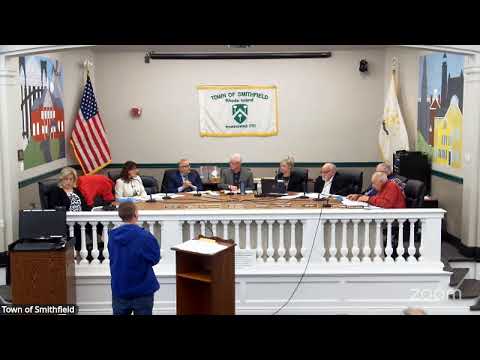
Planning board approves special-use permit for backyard chickens with inspections and waste controls
Summary
The Smithfield Planning Board granted a special-use permit for six hens on a sub-acre R20 lot, imposing conditions including an initial inspection after construction, follow-up checks (3–9 months or seasonal), secure run anchoring, weekly waste removal or covered composting at least 20 ft from lot lines, and compliance with ordinance standards.
The Smithfield Planning Board on April 1 approved a special-use permit allowing an applicant to keep six hens on a sub-acre R20 lot, subject to multiple conditions including an initial inspection once the coop and run are built, follow-up inspections within the first months, measures to secure the run to the ground, and rodent-proof waste storage.
Applicant Richard Lungs, who was sworn before giving testimony, told the board he planned "to have six hens in my backyard to provide my family with eggs." He described a coop and run layout he said met the ordinance's 15-foot setback from the property line and explained he would remove manure at least weekly, store waste in airtight containers, and not free-range the birds.
Town staff and board members reviewed standards in the recently adopted ordinance: coops must be elevated or ventilated, vents should be directed away from neighboring dwellings, fencing and mesh must control rodents, food must be stored in rodent-proof containers, and composting — if used — must be at least 20 feet from lot lines and managed to avoid attractants. The board also discussed the building-permit threshold (structures exceeding 64 square feet can trigger building permits) and asked staff to let the building official determine permit needs based on the submitted plans.
Board members accepted the applicant's breed information as Exhibit A; the exhibit described buff Orpingtons and silkies as lower-noise breeds but provided no decibel measurements. Multiple members said future applicants should provide evidence on expected noise levels and breed selection. Several board members proposed and refined conditions requiring an initial inspection (through the building-permit process if applicable or by notifying zoning/building staff), and follow-up inspections after construction (suggestions ranged from three and six months to seasonal checks in summer and winter). The board also required the run be secured to the ground and that waste be handled in accordance with ordinance sanitation provisions.
A motion to grant the special-use permit subject to those conditions was moved and seconded. The board conducted a roll-call vote; members recorded affirmative votes and the motion passed.