Get Full Government Meeting Transcripts, Videos, & Alerts Forever!
Get email alerts on the Comprehensive Planning topic
No spam. Unsubscribe anytime.
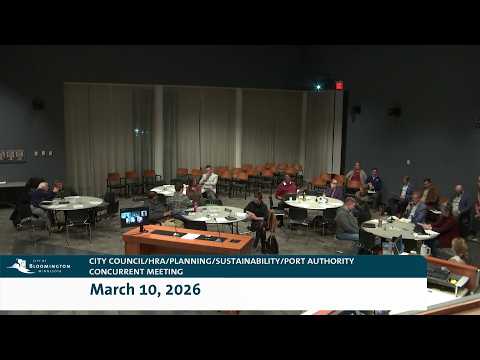
Staff outlines Bloomington 2050 plan framework, timeline and community engagement approach
Summary
Planning staff presented the scope and schedule for Bloomington 2050, highlighting new required elements (climate and natural systems), a proposed chapter structure, and a multi‑year engagement plan aimed at adoption by the Metropolitan Council by Dec. 31, 2028.
Planning staff presented a high‑level roadmap for Bloomington 2050, the city’s comprehensive plan update that will set policy direction for land use, housing, transportation, parks, climate and community health through mid‑century.
"Bloomington 2050 is our roadmap for the city's future," said Dakota Cast, Planning Supervisor and project manager, introducing the plan framework and a stepwise community engagement schedule. Cast said the Metropolitan Council’s regional plan requires that the local comprehensive plan be adopted by Dec. 31, 2028, and described required chapters and suggested additions, including a new climate chapter and a separate natural systems/parks chapter.
Staff proposed a three‑phase engagement strategy for 2026–2028: phase one to identify big ideas and issues (2026), phase two to develop policy alternatives and preferred approaches (2027), and phase three to finalize the draft plan and pursue formal adoption and adjacent‑jurisdiction review in 2028. The presentation highlighted demographic and housing data that will guide planning scenarios — a modest recent population increase, a median household income of about $93,211, a projected 2050 population of roughly 103,400, and trends such as a 37% rise in people living in poverty over the last decade.
Cast invited boards, commissions and the public to participate via online surveys, pop‑up events, visioning sessions and a community advisory committee that will recommend draft goals and strategies. Staff said the plan team will coordinate Bloomington 2050 with concurrent initiatives (for example, a strategic plan update and a climate action effort) to reduce duplicative outreach and align policy outcomes.