Get Full Government Meeting Transcripts, Videos, & Alerts Forever!
Get email alerts on the Housing Affordability topic
No spam. Unsubscribe anytime.
Consultants say market shifts and rising costs justify updating Bloomington’s Opportunity Housing rules; staff proposes raising in‑lieu fee and adding AMI tiers
Summary
An updated housing nexus and feasibility study presented to the council finds rising construction costs and demographic shifts have squeezed developers’ ability to provide deep affordability; staff recommended indexing the in‑lieu fee (proposed ~$12/sq ft) and adding 50% and 30% AMI compliance tiers while continuing community engagement and public hearings.
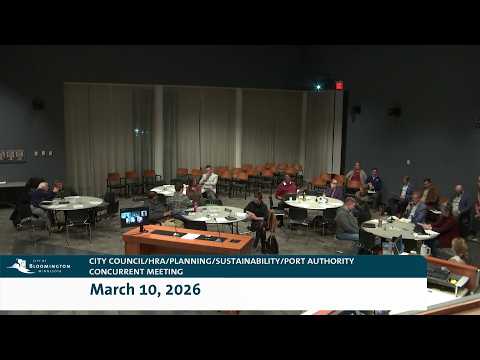
Consultants and city staff told a joint Bloomington City Council and advisory boards study session that changing market conditions since 2019 have eroded the purchasing power of the Opportunity Housing in‑lieu fee and made it harder for typical projects to include deeply affordable units.
Sean Bourgeois, the lead consultant, summarized a multifaceted analysis — census data, developer interviews and custom financial models — showing a sharp income‑mix shift in Bloomington and construction costs up about 28% from the ordinance’s 2019 baseline. "It's a stunning transformation," Bourgeois said, describing the growth in higher‑income households that has bid up housing prices and rents.
The study said the ordinance has delivered results: developers and the Affordable Housing Trust Fund together produced 621 units at or below 60% AMI since adoption. But the report also found uneven use of incentives (notably strong take‑up of parking reductions) and feasibility limits when projects face high cost volatility, constrained revenues and stricter underwriting.
Sherry Okun, who led the nexus and economic impact analysis, explained the study’s method for estimating how new market‑rate units create local demand for lower‑income housing. Her team estimated that a new market‑rate rental household could generate demand that translates into several lower‑income households needing housing options, and that a 100‑unit market project could analytically support up to about 17% additional units serving households across lower AMI bands as an upper bound — a technical estimate rather than a policy mandate.
Based on those findings, city staff presented three principal options for the in‑lieu fee: keep the current $9.60 per gross square foot; adjust the fee for inflation (staff cited approximately $12/sf as an illustrative update); or set a substantially higher fee (which consultants warned could make the fee unusable in many deals). Staff also recommended formally adding compliance tiers at 50% and 30% AMI and clarifying ownership requirements (e.g., setting a uniform 9% at 115% AMI for ownership developments with an optional 4% compliance tier at 80% AMI for flexibility).
During questions, councilmembers pressed staff on collection mechanics and historical subsidy levels. Staff said the in‑lieu fee is generally collected at building permit issuance and that the city offers limited options for timing or reallocation; the fee can be released to the Affordable Housing Trust Fund immediately or held by a developer for two years for application to a subsequent project. When one councilmember recalled a $200,000 per‑unit subsidy figure, staff said that number did not match city tracking and that average trust‑fund subsidy levels the city typically uses for internal benchmarking were closer to $30,000–$35,000 per unit, though exact per‑unit subsidy varies by project and typology.
No formal ordinance change was adopted at the study session. Staff said the next steps would include refinements to the recommended adjustments, community engagement and formal public hearings before any ordinance amendment is advanced to the Planning Commission and City Council later this year.