Get Full Government Meeting Transcripts, Videos, & Alerts Forever!
Get email alerts on the Foreign Investment topic
No spam. Unsubscribe anytime.
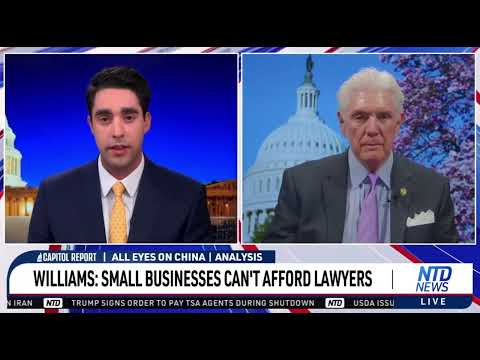
Rep. Roger Williams urges tougher scrutiny of Chinese purchases of U.S. small businesses and farmland
Summary
Rep. Roger Williams, chair of the House Committee on Small Business, said a recent committee hearing raised alarms about Chinese-controlled buyers acquiring U.S. companies, intellectual property and farmland and urged policy changes to keep businesses domestic. Witnesses described legal and supply-chain risks.
Rep. Roger Williams (R), chair of the House Committee on Small Business, said a recent committee hearing highlighted what he described as an urgent problem: Chinese-controlled buyers acquiring U.S. companies, intellectual property and farmland in ways that can displace American owners.
“People may never see this kind of money again,” Williams said, describing deals that pay unusually high prices and, in some cases, leave original owners without operational control. He said these purchases include agricultural land, adding, “They own 31 million acres of our food land, food supply.” Williams attributed these concerns to testimony and cases presented at the hearing.
Williams said the committee is weighing responses that protect intellectual property and U.S. real estate while being fair to landowners. He urged policies that strengthen domestic businesses so owners have less reason to sell, citing lower taxes and fewer regulations as ways to boost American firms’ ability to retain equity and transfer businesses to family members.
The interview included recorded testimony from hearing witnesses. Shawn Murphy described a case involving a company he identified as Lawfair, saying the buyer “hired six law firms, two in New York, one in Los Angeles, and three locally in Cheyenne,” and that the firm and its lawyers “were mocking us and our judicial system.” Murphy said relationships between outside lawyers and state legislators were exploited to the detriment of local operators.
Another witness clip aired during the conversation warned that transactions that appear purely commercial “may become critical to national security tomorrow,” citing investment, supply-chain exposure and intellectual property loss as pathways for strategic vulnerabilities. The interview also included a clip noting that U.S. reliance on foreign sources is significant for strategic inputs, with one speaker saying U.S. rare-earth imports are ‘‘less than the price of an F-35’’ and that a large share of fermentation-based active pharmaceutical ingredients are made in China.
Asked what concrete tools are available to small businesses, Williams said small firms often lack resources such as legal counsel and that part of the response should be to improve their economic position so they are not compelled to sell. He told the host the committee is considering regulatory relief and measures to strengthen domestic manufacturing and inventories for strategic technologies and parts.
Williams discussed the diplomatic angle as well, saying he expects President Trump to press China for fair trade during an upcoming visit and to signal that the United States can compete on strategic technologies and markets.
The interview presented witness allegations and committee priorities; Williams said the committee is exploring policy options but did not announce specific legislation or formal actions during the segment. The hearing testimony and clips were discussed as evidence guiding the committee’s deliberations.