Get Full Government Meeting Transcripts, Videos, & Alerts Forever!
Get email alerts on the Royal Oak Small Area Study topic
No spam. Unsubscribe anytime.
Royal Oak study and developer mediation draw calls for public access
Summary
Residents demanded that the Royal Oak small‑area study meaningfully include neighbors and pressed the council to ensure any informal mediation with the developer under Florida Statute 163.3181 be transparent or at least viewable by affected residents; city staff said a third‑party facilitator will be sought and the statute requires the city to accommodate the applicant’s request for informal mediation.
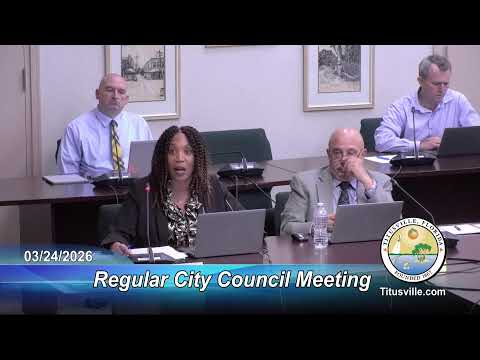
Neighbors and civic groups pressed the Titusville City Council on March 24 over the process for the Royal Oak small‑area study and a developer‑requested informal mediation.
"These studies must inform decisions, not follow them," a Royal Oak neighbor told the council, urging that residents be involved in crafting study questions, assumptions and workshop formats before consultants draw conclusions. Speakers emphasized potential impacts on flooding, traffic and infrastructure and said adjacent residents — roughly 540 dwelling units were cited as contiguous to the Royal Oak property — deserve active roles in shaping the work.
Council indicated it had rejected a staff plan to do the study entirely in‑house and the mayor directed Community Development to seek a third‑party consultant and facilitator to run an inclusive process. "You'll have every step of the way public will be invited through workshops, meetings, etc., to work with the consultant and staff," the mayor said.
Separately, the developer for Royal Oak filed a request for informal mediation under Florida Statute 163.3181. The city attorney explained the statute gives applicants a right to request such an informal mediation but does not specify detailed procedures, public‑notice rules or whether the public may participate; any agreement would still require formal council action to be effective.
Public commenters — including attorneys and neighborhood association representatives — urged openness if mediation proceeds: allow public viewing (for example by livestream or Zoom), notify affected property owners and prefer that the small‑area study be completed before substantive mediation to ensure discussions are informed by technical findings.
Why it matters: Royal Oak is a high‑impact local land‑use issue. Residents told council that study methodology and the order of study versus mediation will shape whether outcomes are seen as credible.
What’s next: Council directed staff to pursue a third‑party facilitator for the study and the city attorney is in contact with the applicant’s counsel to learn how the requested informal mediation will be structured; council did not set a date for mediation and emphasized any binding decision must return to the public meeting process.