Get Full Government Meeting Transcripts, Videos, & Alerts Forever!
Get email alerts on the Housing And Homelessness topic
No spam. Unsubscribe anytime.
OHS updates council on HUD lawsuit, ARPA spenddown and cold-weather shelter operations
Summary
Office of Homeless Services told the committee Metro joined a lawsuit challenging HUD’s NOFO, described how the federal appropriations bill affects CoC renewals, and outlined emergency-shelter operations and ARPA spenddown reporting; directors said shelters opened with short lead times and budgets were increased after a longer-than-normal winter season.
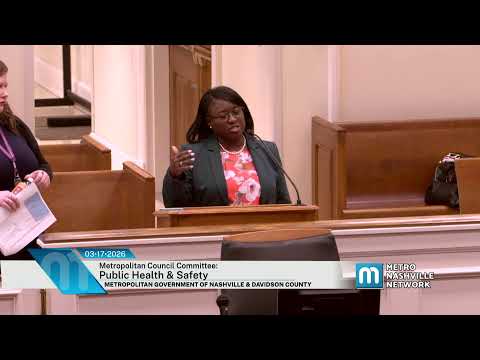
Officials from the Office of Homeless Services (OHS) briefed the Public Health & Safety Committee on the agency’s monthly ARPA report, the city’s involvement in a lawsuit against HUD, and changes in shelter operations over a lengthy winter season.
An OHS staff member said Metro joined other municipalities in litigation challenging HUD’s recent Notice of Funding Opportunity (NOFO). A preliminary injunction had been granted in December and HUD had appealed, the staff member said. Committee members were also told that a federal appropriations bill contains provisions that will non‑competitively renew certain continuum-of-care projects if HUD cannot conduct competitions by specified dates; it also raises the minimum guaranteed tier-one funding in the next NOFO to at least 60%.
The packet included ARPA spenddown tables and OHS said it will continue to provide monthly updates showing remaining balances and project timelines. Council Member Evans and others pressed for more granular accounting of which organizations received funds and how much remained; OHS said a monthly ARPA packet outlines amounts spent and remaining for each project.
Director April Calvin described shelter operations and the decision process for opening overflow shelters during severe weather: "we make decisions like on a 7-day, a 3-day, and then a 24-hour notice," and staff work to notify partners and arrange transportation. She said the Metro Emergency Overflow Cold Weather Shelter had operated many more nights this season than in recent years and that funding for cold-weather shelter was increased after previous seasons because costs rose with more open days, staffing and security needs.
Why it matters: The update ties federal funding rules and litigation to local program continuity. The appropriations language and potential non-competitive renewals affect how CoC-funded projects will be administered and provide immediate relief if HUD cannot conduct timely competitions. The shelter operations briefing explained how on-site triage during cold-weather operations can shorten the time to housing.
Next steps: OHS will continue monthly ARPA reporting; council members requested further accounting and staff indicated they had sent multiple email responses to some requests but would provide further documentation to the committee.