Get Full Government Meeting Transcripts, Videos, & Alerts Forever!
Get email alerts on the Elections topic
No spam. Unsubscribe anytime.
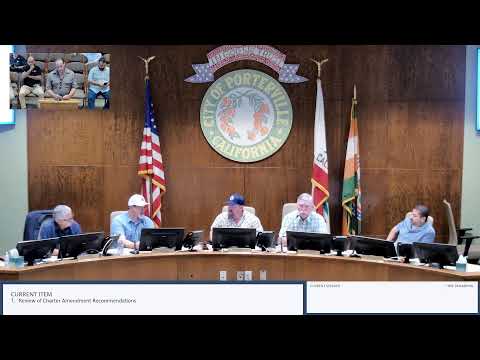
'Elections, not selections': Porterville council approves special-election rule for council vacancies
Summary
The council voted 5-0 to require special elections to fill council vacancies when more than roughly one year remains on the term, allowing only short temporary appointments until the election; members cited past long-term appointments as rationale.
The Porterville City Council voted unanimously to change its approach to filling council vacancies, adopting a framework the council summarized as “Elections, not selections.” Under the approach the council approved, vacancies with more than about one year remaining in the unexpired term would be filled by special election (or consolidated with a near general election where practicable) and council appointments would be permitted only as short-term, temporary measures until an election can be held.
Council members debated costs: staff reported that consolidating a seat with an existing election could cost roughly $10,000 per district while a standalone special election might run about $100,000. Proponents argued the expense is justified to restore voter choice when a long portion of a term remains unfilled by election; others urged a simple, clear rule for voters to avoid ambiguity.
Mayor Meister moved the time-frame language (using Councilman Beltran’s one-year threshold as the working standard). "Elections, not selections," the mayor stated when calling the motion; a second was recorded and the council voted 5-0. The adopted approach requires the council to call a special election within a set window when consolidation is not possible and allows the council to appoint a temporary member only until that special election occurs.
Staff and the city attorney will return with precise ballot language and timing windows (the committee’s draft had a 30-day call window, and a 90–180 day election window), and the council asked staff for cost estimates for consolidating versus holding standalone elections.