Get Full Government Meeting Transcripts, Videos, & Alerts Forever!
Get email alerts on the Municipal Court topic
No spam. Unsubscribe anytime.
Council hears municipal‑code review after Colorado Supreme Court ruling; hundreds of cases reviewed
Summary
City attorneys and the public defender updated council on aligning Aurora’s municipal code with a Colorado Supreme Court decision (referred to as Camp/Simmons), noting that many ordinance penalties now map to lower state classifications; staff reviewed hundreds of preexisting suspended sentences and have created joint notices for court files.
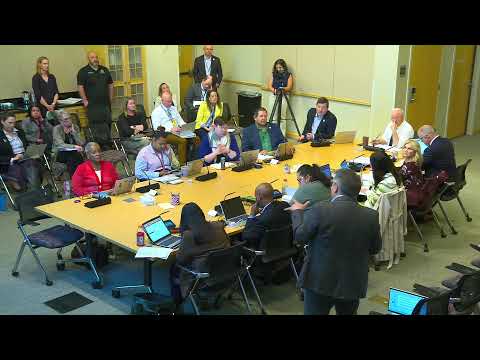
Chief Deputy City Attorney Julie Heckman and Chief Public Defender Elizabeth Cadiz told the council on March 23 that a December Colorado Supreme Court decision has narrowed the permissible maximum penalties for many municipal ordinance violations, triggering a broad review of Aurora’s code and case files.
Staff said they reviewed roughly 135 sections (primarily chapter 94) and agreed on classifications for most charges; they identified about 43 offenses that would map to class two misdemeanors (maximum 120 days) and roughly 25 offenses that would now be petty offenses (maximum 10 days and a $300 fine) under state code analogues. They also found roughly 30 charges that the city believes are not impacted because no state code corollary exists.
The presenters described a joint, practical safeguard they took for cases with suspended sentences entered before the ruling: the prosecutor’s office and public defenders prepared a one‑page joint notice to place in court files that documents the review and sets the new maximum penalty should the case be reactivated. Julie Heckman said the offices reviewed between "3 and 500" suspended‑sentence cases and asked Judge Day to record the joint notice so the court file will reflect the revised exposure if a revocation is sought.
Council members discussed policy options, including whether the city should stop prosecuting criminal ordinance cases to save what one member estimated could be $7 million annually. City staff noted costs and trade‑offs and said rewriting the code will take weeks or months; they will send ordinance language to the Public Safety committee for detailed review.
Speakers repeatedly emphasized they were operating under the court ruling and that judges, prosecutors and defense counsel retain procedural safeguards. The city attorney’s office said it is not enforcing certain mandatory minimums at present while code revisions are completed, and that prosecutions will be assessed on a case‑by‑case basis.
What happens next: staff will draft code revisions and bring them to the Public Safety committee and council for ordinance updates; the review and rewrite are expected to take several weeks to months.