Get Full Government Meeting Transcripts, Videos, & Alerts Forever!
Get email alerts on the Housing Production topic
No spam. Unsubscribe anytime.
Supervisors accept housing production report and ask for city‑by‑city unit counts and a separate labor study
Summary
The committee heard staff describe partnerships with cities and developer convenings to accelerate affordable housing; supervisors asked for a city/district breakdown of units produced in the last 10 years and requested a separate report on labor costs and apprenticeship opportunities to lower development expenses.
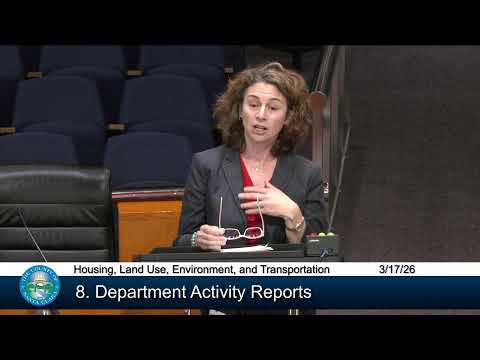
Chair Supervisor Margaret Abe‑Koga and Vice Chair Supervisor Sylvia Arenas on March 17 accepted a report from the Office of the County Executive and the Office of Supportive Housing on multifamily preservation and housing production and asked staff for two follow‑up reports: a jurisdictional summary of affordable units built over the last 10 years and a separate analysis of labor‑cost strategies.
"How can we further incentivize development? What would it mean to tie it to maybe geographic goals?" Vice Chair Supervisor Arenas asked during the discussion, pressing staff to consider whether targeted incentives could steer projects into under‑resourced parts of the county.
Deputy County Executive Consuelo Hernandez told the committee the county regularly convenes developers and partners with cities to move projects forward. "Whenever the market‑rate developers can't make their projects pencil, we are their first phone call," she said, describing prior Measure‑A conversions and purchases of entitlements that allowed projects to be recast as affordable housing.
Staff described Measure‑A activity in Cupertino, Campbell and Gilroy as examples of city–county partnership and noted a county‑owned site identified at 10 Kirk, where the county has selected the housing authority as developer and begun early community engagement.
Chair Abe‑Koga cited a newspaper report that "40,000 affordable housing units are in the pipeline waiting to be built" and asked how past state bond proceeds were allocated and whether guidance exists for a proposed statewide housing bond; staff said prior programs such as SB2/NO PLACE LIKE HOME were handled in different ways and that there is ongoing discussion about how a future $10 billion bond might be administered.
Supervisors also highlighted that labor costs are a principal driver of development expense and asked staff to report back separately on whether apprenticeships or workforce programs could mitigate those costs; staff said that labor‑focused work would likely be coordinated through the County Executive's Office and other departments rather than the Office of Supportive Housing alone.
The motion to accept the report and request the two follow‑ups was moved by Supervisor Arenas, seconded by Chair Abe‑Koga and carried on roll call.
Next steps: staff committed to preparing the city‑level unit inventory and a separate labor/apprenticeship report to return at a future meeting.