Get Full Government Meeting Transcripts, Videos, & Alerts Forever!
Get email alerts on the Ordinance Enforcement topic
No spam. Unsubscribe anytime.
Residents push back on new driveway storage rules; board pauses enforcement and will revise ordinance
Summary
After months of complaints and recent enforcement activity, Swansea trustees agreed to pause citation issuance and revisit an ordinance that restricts storage of RVs, trailers and similar vehicles in driveways unless parked on an 'improved surface'; residents told the board the rule was implemented with little notice and could create significant out‑of‑pocket costs.
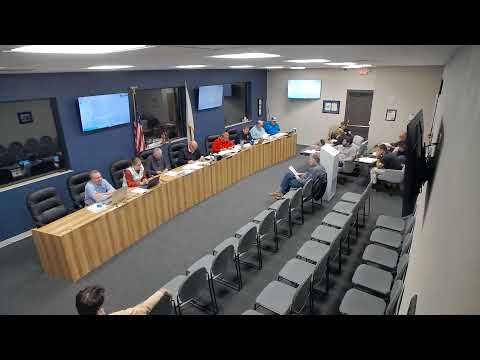
Trustees opened a lengthy discussion about an ordinance regulating storage of recreational vehicles, trailers, commercial vehicles and vehicle coverings. Staff said the ordinance seeks to require such items be stored on an improved surface (asphalt, concrete or comparable paving) and described enforcement that followed a spike in complaints. Several trustees said they supported having enforcement tools to address long‑term, dilapidated storage that affects neighborhood appearance; code‑enforcement staff said comparable ordinances exist in nearby municipalities.
But the item drew sustained public comment and pushback. James Buff, who introduced himself as a Swansea resident, said he reviewed meeting minutes and could not find documentation that the board considered the financial impact of the ordinance before it passed; he asked for explanation and better public notice. A homeowner who said her trailer had been parked for five or six years said the cost to make a driveway compliant — including gate modifications and an approved pad — could range from $1,500 to $5,000. Charlotte Hansen and other residents said the rule would force families to pay for off‑site storage or move vehicles to places that are unsafe or impractical.
A fire‑department member who identified himself as a Swansea firefighter supported reasonable limits on commercial or derelict vehicles but emphasized that many RV owners keep well‑maintained units on paved driveways and that insurance and safety concerns lead some residents to park at home. Code‑enforcement staff reported a mix of public response, noting both gratitude when problematic lots were corrected and strong resistance from residents who said they had not been properly notified of the change.
Following the comments, trustees agreed to pause issuing citations that had been prepared and to ask staff to draft clarified language (including better definition of 'improved surface,' grandfathering, driveway interpretation and allowable temporary parking). Staff were instructed to collect trustee input and public suggestions and return with a revised ordinance for further review before resuming enforcement.