Get Full Government Meeting Transcripts, Videos, & Alerts Forever!
Get email alerts on the Municipal Budget topic
No spam. Unsubscribe anytime.
Templeton leaders hear plan of deep cuts as town faces large shortfall; police, parks and schools could be hit
Summary
Select Board heard a Town Administrator exercise showing roughly $910,000–$1.0M in possible reductions, including cuts to police overtime and positions, deferred DPW maintenance, parks fee hikes and potential school staffing reductions that would raise class sizes and trim extracurriculars.
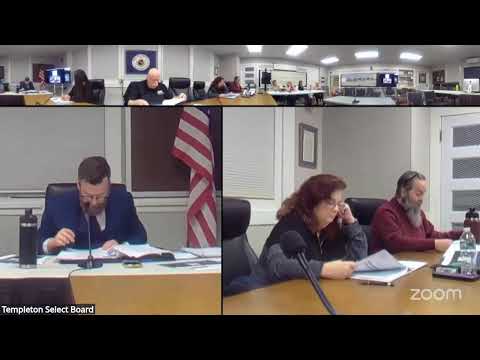
The Town of Templeton is weighing steep service and staff reductions after the Town Administrator told the Select Board on March 23 that a roughly $1 million shortfall would require cuts that would affect police coverage, public works maintenance, parks programming and school staffing.
Town Administrator Jeff presented a prioritized “exercise” showing where about $910,000 could be taken from departmental operating budgets. He said the list was illustrative, not a proposal, and warned that many line‑item cuts would be either service reductions or deferrals that increase long‑term costs.
Why it matters: the shortfall follows years of tight budgets and rising costs; some options would reduce overtime and maintenance spending but risk pushing departments over budget if unanticipated events occur. The town must balance near‑term savings against the operational risks of fewer officers, less training, postponed capital maintenance and larger elementary classrooms.
Chief of Police (department) told the board that part‑time hiring has collapsed and the department is already strained. “I can’t get them. They’re not coming through the door,” the chief said of part‑time applicants, explaining the department has moved to fund an additional full‑time officer to avoid chronic open shifts. Board members repeatedly asked whether raising part‑time pay or other adjustments could slow attrition.
The Town Administrator’s exercise identified the following headline reductions (illustrative totals combined from multiple line items): eliminating one proposed new police officer and trimming per‑diem/unscheduled overtime; scaling back some firefighter part‑time shifts and non‑mandatory trainings; deferring nonessential DPW equipment replacements and cutting some contractual maintenance; asking Parks & Recreation to raise fees 30–65% and to shift some responsibilities back to DPW; and asking the cable department to live inside projected user revenues (which could require staff reductions).
School impact: the regional superintendent warned that deeper cuts — of the magnitude used in the exercise — would likely require on the order of a dozen staff reductions across the district and the consolidation of elementary sections, creating average class sizes in the high‑20s and 30s and elimination of some extracurriculars. “If I cut a million dollars… you’re talking about 18 staff cuts,” the superintendent said, describing the practical classroom consequences of the exercise.
Budget tradeoffs: Finance staff and department heads emphasized that many pay and overtime lines are governed by collective bargaining agreements, state POST/training rules or mandatory certification requirements, limiting low‑risk options for savings. The town administrator cautioned that repeatedly cutting overtime and maintenance leaves departments vulnerable to spending overruns and deferred capital cost spikes that press future budgets.
Process and next steps: Board members asked for additional options and for firmer projections of how much of the gap could be closed with revenue vs. cuts. Multiple members urged the administration to return with a prioritized list of cuts that minimizes frontline service impacts, and with timing for any capital deferrals. The board will continue budget deliberations ahead of the warrant and Town Meeting.
A vote on budget articles is expected before the Select Board finalizes whether to place any override questions or other measures on the ballot; the board signaled it will weigh both short‑term reductions and structural options such as targeted revenue measures.