Get Full Government Meeting Transcripts, Videos, & Alerts Forever!
Get email alerts on the Internet Gaming topic
No spam. Unsubscribe anytime.
Maryland committee hears fierce debate over proposed internet‑gaming referendum
Summary
Supporters told the Ways and Means Committee that a voter referendum on online casino and sports wagering could recapture out‑of‑state money and fund education; opponents warned of job losses at brick‑and‑mortar casinos, sharp increases in problem gambling and harms to local tourism and jobs.
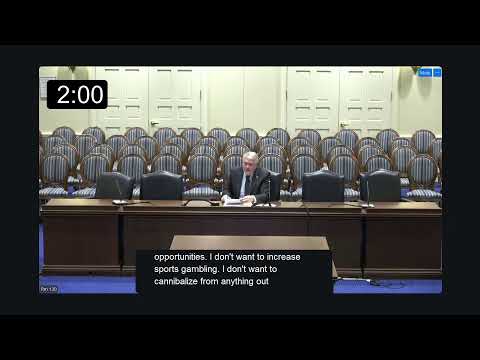
The House Ways and Means Committee heard hours of testimony on March 5 as Delegate Terri Young presented a proposed referendum and follow‑up framework to authorize internet gaming in Maryland. Young framed the bill as a two‑step process: voter approval of a constitutional amendment followed by implementing legislation that would direct most net revenues to education and the Blueprint for Maryland's Future should voters approve the change.
Proponents said regulated i‑gaming could convert online wagering that now escapes state oversight into tax revenue. "The choice is not between gaming and not gaming," Delegate Young told the committee, arguing that Marylanders already place substantial bets on offshore sites and that a taxed, regulated market would recover revenue for schools and public services.
The opposition was broad and vociferous. Labor unions, casino operators, tourism groups and public‑health experts testified that 24/7 access on mobile phones magnifies addiction risks, reduces foot traffic at casinos that support local jobs and community grants, and produces few local jobs compared with brick‑and‑mortar venues. UFCW Local 27 and Unite Here Local 7 warned that the state’s six casinos provide middle‑class jobs — many of which depend on in‑person diners, hotel stays and tipping structures that do not exist online.
Public‑health witnesses and the Maryland Center of Excellence on Problem Gambling described increasing calls for help since online sports wagering expanded. They urged stronger safeguards, real‑time monitoring of risky play, public‑education campaigns and new funding for treatment and peer recovery before any expansion.
The committee’s members pressed witnesses on competing fiscal estimates and on differences in observed outcomes in other states. Casino and retail stakeholders disputed the projected net revenue gains in the bill’s fiscal note, pointing to cannibalization in other jurisdictions where online offerings grew and to recent expansions of gaming in neighboring states. Supporters countered with data from markets that added online play and argued that a properly taxed and regulated market could still expand the overall gaming pie.
The sponsor repeatedly said she sought a transparent, deliberative process, promising to work with labor, the tourism industry, the Lottery and public‑health experts if the referendum moves forward. The committee did not vote on the measure at the March 5 hearing; more briefings and stakeholder sessions are expected before any final action.