Get Full Government Meeting Transcripts, Videos, & Alerts Forever!
Get email alerts on the SB503 Parole Expansion topic
No spam. Unsubscribe anytime.
Dozens of formerly incarcerated people and experts urge Connecticut to expand parole eligibility for offenses under age 26
Summary
At an eight‑plus‑hour Judiciary Committee hearing, survivors, advocates, academics and many formerly incarcerated witnesses urged lawmakers to pass SB503 to remove an arbitrary 2005 parole cutoff and extend early‑parole review to people who committed offenses before age 26. DOC officials warned of operational impacts for some related reforms.
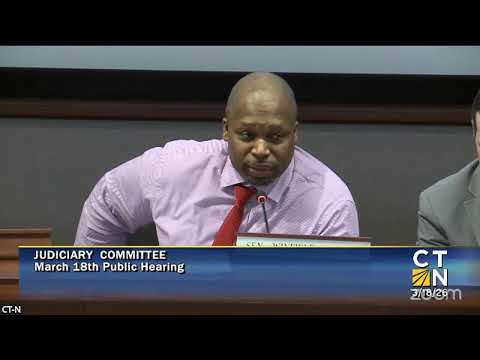
Hartford — A long slate of witnesses and experts pressed Connecticut’s Judiciary Committee on March 18 to expand parole eligibility for people who committed crimes as young adults, arguing the state’s justice system should reflect modern neuroscience and the lived experience of long‑term incarcerated people.
Dozens of formerly incarcerated witnesses, family members and higher‑education partners testified in support of SB503, the emerging‑adult parole proposal that would eliminate an October 1, 2005 cutoff and allow people who committed offenses before age 26 to seek early parole review after serving a substantial portion of a sentence. Many read statements written by people still in custody who described decades of education, mentorship and rehabilitation while urging lawmakers to let parole boards evaluate who a person is today rather than fixate on their teenage years.
"This bill does not promise immediate release. It guarantees an opportunity to be seen," said multiple witnesses who had been released under prior reforms and now work in community re‑entry, education and violence prevention. Academics and clinicians from prison‑education programs and neuroscience researchers told the committee that brain regions controlling impulse control and long‑term planning mature into the mid‑20s, reinforcing the case for a later age threshold.
Advocates also flagged the racial impact of the current cutoff: multiple witnesses and an analysis presented during the hearing said the date disproportionately excludes Black and Latino people, arguing the policy perpetuates long‑standing disparities.
Department of Correction officials and correctional staff did not oppose the stated intent, but cautioned the committee about operational realities for related bills. DOC witnesses warned that statutorily mandating additional weekly in‑person visits (SB476) or adding new health‑care duties (HB5567) without commensurate staffing and funding could strain facilities already short of officers and medical staff. "Visitation is staff‑intensive," said a corrections steward. "If you codify minimums without resources, you create safety risks."
Other bills heard at the same hearing drew attention. The department’s health officials and outside clinicians testified in favor of expanding on‑site mammography and clarifying medical pathways for women in custody (SB391), while retail industry witnesses urged stronger penalties for organized retail theft and gift‑card fraud (HB5563). The committee also heard from advocates advancing expanded access to postconviction DNA testing and reforms to correctional ombudsman powers.
Lawmakers asked a steady stream of operational questions, asking DOC witnesses and correctional staff to provide staffing estimates and cost models if visitation or health mandates were enacted. Corrections leaders and union representatives asked the committee to let administrative directives and funding decisions set staffing and scheduling rules rather than fixed statutory minimums, or to amend bills with explicit funding and implementation details.
What’s next: The committee has heard hours of testimony and several parties suggested narrower statutory language or phased, funded pilots to address staffing and implementation concerns. Supporters of SB503 said they would supply additional data showing low recidivism rates for people released under similar laws in other states. Corrections officials said the department will provide operational cost estimates if the panel asks. The committee has not scheduled a vote; the measures remain under consideration.