Get Full Government Meeting Transcripts, Videos, & Alerts Forever!
Get email alerts on the Education Cte topic
No spam. Unsubscribe anytime.
Quincy School District highlights new EMT, nursing-assistant pathways and student certifications
Summary
At a board meeting, the district’s CTE director and teachers described new health-science pathways that let high-school students earn EMT or Washington State nursing-assistant certification and college credit; presenters emphasized hands-on clinical rotations, capped class sizes, and strong early pass rates.
Elizabeth Naval, identified in the meeting as the CTE director for Quincy School District, opened the Career & Technical Education presentation by framing the programs around local workforce demand and “student-centered” pathways that lead directly to jobs or further education. “I'm Elizabeth Naval. I'm the CTE director for Quincy School District,” she said.
Lana Vanerk, the EMT instructor, told the board the EMT course follows a nationally recognized curriculum that mirrors community college and fire‑department training and prepares students for certification and supervised clinical rotations. “These kids hopefully when they graduate, they will be walking out with that EMT certification and they can go and walk into the industry with that,” she said, describing ride‑alongs and hospital clinicals as part of the program.
Camille Jones outlined the nursing‑assistant (CNA) program and its outcomes: at the end of the school year students can obtain Washington State CNA certification and earn 14 articulated college credits (nine nursing credits and five medical‑terminology credits) through Big Bend. The board was told the program emphasizes early clinical immersion and team‑based care in hospitals and long‑term‑care facilities.
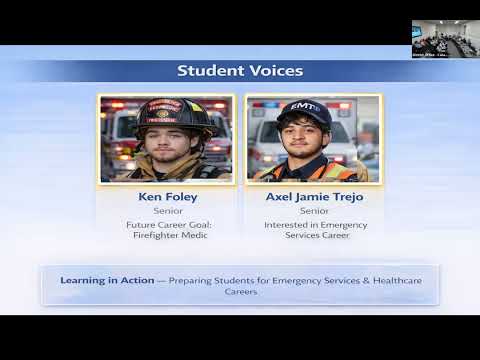
Students who completed the programs spoke to the board about next steps. “This CNA class has helped me because it opened more doors for me at a young age,” said student Alison Ross, who said she plans to pursue an AA and later a medical career. Jin Gonzalez described the program as providing hands‑on experience and confidence for entry into dental‑hygiene training.
Board members asked operational questions about capacity and certification requirements. Staff explained practicum and supervision ratios drive caps: nursing‑assistant classes are limited to about 20 students and cohorts are split into smaller practicums to meet state and clinical requirements. Camille Jones reported a 100% pass rate for clinicals in the cohorts presented. Presenters also said the district must meet Department of Health and OSPI verification steps to maintain certification eligibility.
Naval described several semester‑long course proposals to expand health‑science offerings, including (1) Patient Care and Therapeutic Support, (2) Healthcare Technician & Support Services (a non‑patient‑facing technical track), and (3) a Health‑Science Capstone/Clinical Internship that would pair students with community mentors (dental hygienists, pediatricians and other local clinicians).
The presentation closed with public recognition of staff and administrators for navigating insurance, scheduling and administrative requirements to launch the programs. The board adopted the evening’s consent items and moved on to the district’s multilingual update after thanking the CTE team and their students.
Next steps: staff said they will monitor demand, consider adding sections if interest grows, and continue meeting Department of Health and OSPI requirements for certification and clinical placements.