Get Full Government Meeting Transcripts, Videos, & Alerts Forever!
Get email alerts on the Transportation Policy topic
No spam. Unsubscribe anytime.
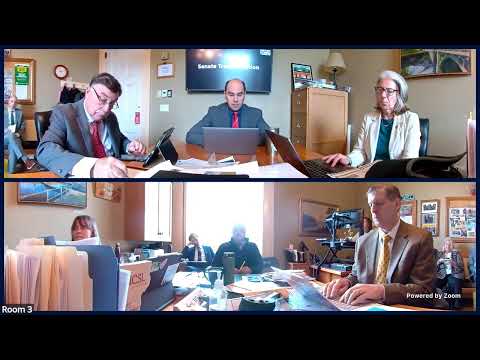
Senate Transportation debates hybrid-vehicle amendment scope, agrees to draft two versions and consult finance
Summary
Senate Transportation discussed an amendment referenced in the transcript as "9 44," debating whether to include all hybrid vehicles or limit coverage to plug-in hybrids and whether to pair the change with a fuel-tax credit; the committee agreed to have staff draft two amendment versions and confer with the finance committee within 24 hours.
The Senate Transportation committee spent its May 5 meeting hashing out the scope of an amendment referenced in the transcript as "9 44," debating whether the change should cover all hybrid vehicles or be limited to plug-in hybrids and whether to include a fuel-tax credit tied to the proposal. Chair said the preference was to advance a version covering "all hybrids."
The issue centers on fairness in gas-tax revenue: one committee member argued lawmakers are trying to capture vehicles that are paying less in gas tax than others and urged a broader approach until program details are available. "Any line we draw in the sand might be confusing, but, hopefully, we'll get plans back that will help us understand what the framework of the program is," the committee member said.
Agency officials warned the committee that distinguishing mild hybrids from regular internal combustion-engine vehicles can be technically difficult and that some mild-hybrid models may have worse fuel economy than certain efficient ICE cars. As one agency official put it: "it may be worth hearing how easy it is to differentiate between a mild hybrid and a regular internal combustion engine." The agency noted earlier drafting had referenced a 25 miles per gallon threshold but members signaled reluctance to use a strict numeric cutoff.
Committee members and staff agreed on next steps: prepare two drafted amendment forms — one including the full set of proposed changes and a second limited to the hybrid-language option — and consult the finance committee about whether finance will introduce a combined amendment or whether Transportation will act as backup. Chair asked staff to circulate updated drafts and to organize follow-up conversations with finance within the next 24 hours. "If we introduce them something, it will be all 1 amendment with the corrective changes," the Chair said.
Members also reviewed smaller items tied to the bill: alternative language for the hybrid section (identified in the transcript as section 22), a proposed fuel-tax credit associated with hybrids, and agency-proposed technical amendments raised over the weekend. The committee agreed to a separate 90-day review period for a vehicle-history report and related study language for common-interest communities. Committee members noted that proposed jet-fuel language had already been removed in coordination with finance.
No formal motions or votes were recorded in the transcript. The committee directed staff and agency officials to update the draft language and notify members; the next procedural step is further coordination with the finance committee and circulation of the two amendment drafts for potential introduction.