Get Full Government Meeting Transcripts, Videos, & Alerts Forever!
Get email alerts on the Economic Development Energy topic
No spam. Unsubscribe anytime.
Council opens preliminary discussion on data centers; staff to do targeted fact‑finding
Summary
Council members debated possible data-center development on city‑owned Lodi Energy Center acreage and nearby farmland. Staff and utility officials warned technical hurdles (transmission studies, distribution infrastructure, water reuse constraints) but said there could be revenue upside; council asked staff and NCPA representatives to pursue preliminary analysis without diverting core staff resources.
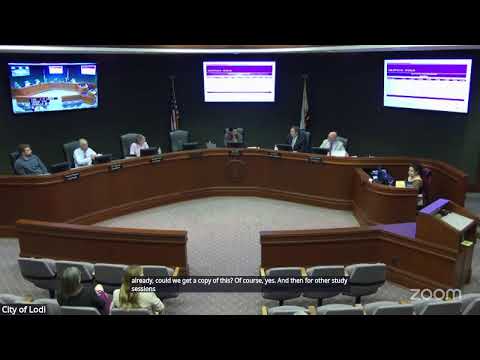
A council-initiated discussion about data centers dominated part of the May 6 meeting, with members weighing potential long-term revenue against energy, water and community impacts.
Councilmember Bregman introduced the item, citing constituent queries and the city’s ownership stake in the Lodi Energy Center (LEC) and nearby acreage. Jeff (utility staff) explained the LEC is a 300-megawatt natural gas generation facility and is not currently modeled to provide large-scale retail service without transmission studies and distribution build‑out. Sean Nathan and other staff outlined water reuse constraints: while the White Slough wastewater-treatment site includes agricultural irrigation acreage, prior studies indicated a minimum acreage (≈440 acres) is needed to accommodate treated effluent if major new industrial uses are introduced.
Councilmembers noted potential fiscal benefits — including large lease or impact-fee payments and opportunities to leverage underutilized generation capacity — while others raised concerns about increased electrical rates, use of Title 22 recycled water, air and noise impacts from generators, and limited local job creation from large data centers. Public commenters urged a desktop analysis to quantify lease and power revenue potential and to flag environmental trade-offs.
Interim City Manager Aaron Bush and staff asked council to clarify whether to divert staff resources for a detailed feasibility study. Council directed the two NCPA representatives and staff to undertake targeted fact‑finding (desktop analyses, coordination with NCPA and prospective transmission studies) while cautioning to avoid diverting staff from prioritized strategic-plan projects. No approvals or commitments were made; the outcome was direction for preliminary information-gathering.