Get Full Government Meeting Transcripts, Videos, & Alerts Forever!
Get email alerts on the Land Use Regulation topic
No spam. Unsubscribe anytime.
Des Moines County supervisors direct staff to draft moratorium on data centers and crypto mining as zoning options are considered
Summary
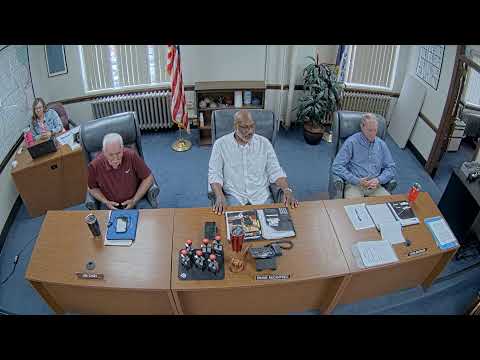
After a public work session dominated by concerns about large water and power demands, the Des Moines County Board of Supervisors asked staff to prepare a moratorium resolution focused on data centers and commercial cryptocurrency mining while exploring zoning and home-rule ordinance options.
The Des Moines County Board of Supervisors opened a public work session and public comment period focused on whether and how to regulate large industrial uses, including data centers and commercial cryptocurrency mining. Supervisors directed staff to draft moratorium language that would pause new data-center/crypto projects while the county considers zoning changes or a home-rule industrial ordinance.
Residents and county staff urged caution. One resident told the board, “The most important thing right now is to get a moratorium,” framing the pause as a short-term tool to allow study of impacts. County staff and several supervisors cited potential strains on county water resources and electric infrastructure, and warned that the recently passed state property-tax reform could complicate funding local responses.
The county attorney reviewed legal options. He said moratoria are commonly enacted via resolution and can be a legitimate step “as long as you’re in the process of making legislation,” citing recent case law and county practice. Staff outlined alternatives: expanding the existing two-mile zoning area, adopting countywide zoning, creating a home-rule industrial ordinance that would require notice and board approval for large developments, or drafting a narrowly tailored data-center definition similar to language used in Linn County that explicitly includes commercial cryptocurrency mining.
Public commenters pressed officials on water use, wastewater disposal and the fiscal costs of new infrastructure. One attendee summarized a regional example, saying similar projects can draw “3 to 5,000,000 gallons of water per day” in some counties and urged the board to evaluate the county’s water capacity before permitting large facilities. Conservation and other department staff urged early budget conversations because changes to what can be funded by debt or debt service may shift costs onto levy-capped general funds.
Supervisors discussed the moratorium’s scope and duration. Options discussed included a narrowly scoped moratorium aimed at data centers and commercial crypto operations, or a broader pause on industrial projects that exceed defined thresholds for water use, power demand or wastewater generation. The county attorney noted the Worth County Supreme Court decision has supported moratoria used legitimately while legislative work proceeds; the board discussed setting an initial time-limited period (for example, 90 days or up to one year) or drafting language that lasts until an ordinance is adopted.
The board did not adopt a moratorium at the meeting; instead they unanimously asked staff to prepare draft moratorium language and bring it back for consideration at a future meeting. The draft will identify the proposed scope (members discussed data centers and commercial cryptocurrency mining as primary targets), enforcement language and a recommended time frame. The supervisors also asked staff to research definitions and examples used in other Iowa counties and to coordinate with regional planners and utility providers.
The board’s next procedural step is for staff to produce draft moratorium/resolution language and a short analysis of options (zoning expansion, home-rule ordinance, ballot path and the estimated timeline and cost for each). The matter will return to the board for a formal vote on any moratorium or ordinance.