Get email alerts on the Annexation topic
No spam. Unsubscribe anytime.
Council reviews two annexation requests; staff recommends modified boundaries and separate processing
Summary
City staff presented two annexation notices affecting roughly 38 acres and recommended modifying the boundaries to create more regular city limits; council requested legal guidance and signaled support for preparing two separate resolutions while asking for options to require applicants to fund consultant work.
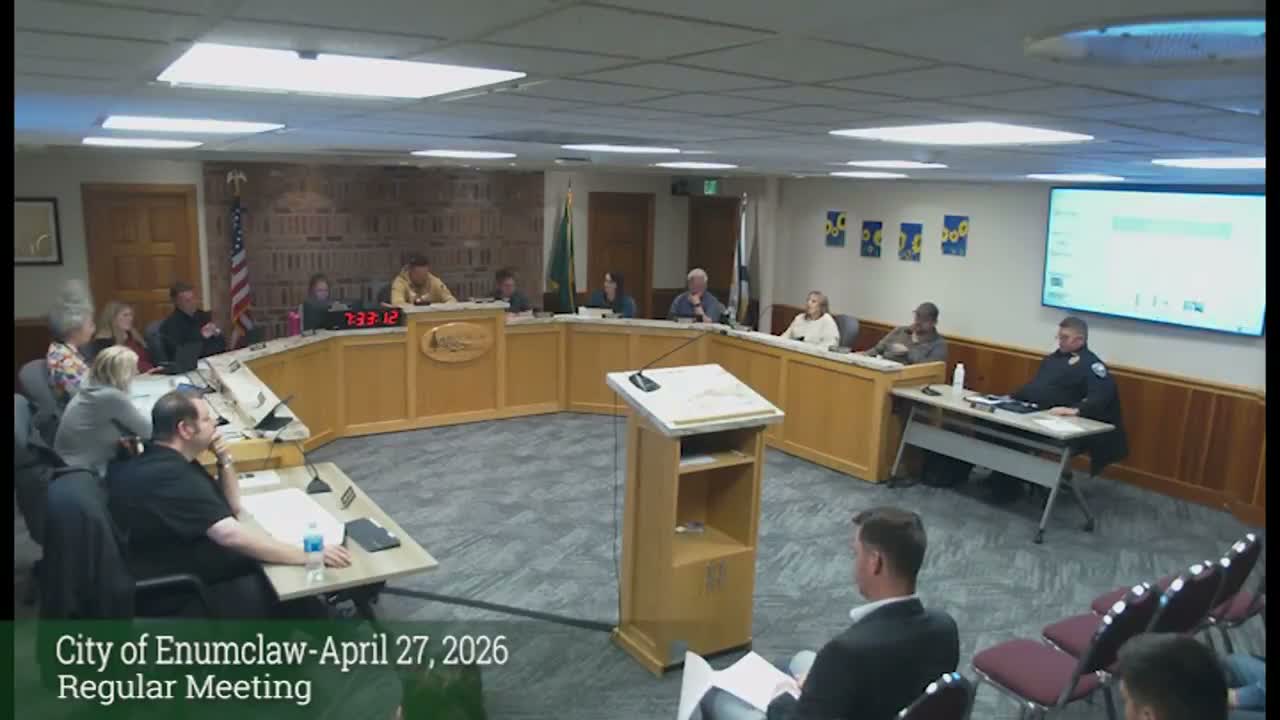
Chris Massenet, the city’s community development director, presented two annexation notices the city received in March that together would affect about 38 acres and have an estimated combined assessed value near $8.5 million. He told the council the properties are vacant, zoned R‑2 (low‑density residential), and have nearby water and sewer stub‑outs that would make connection feasible.
“Staff would suggest that the city council review the material and maybe give staff some direction on whether to prepare one resolution to accept, reject, or modify or two resolutions to accept, reject, or modify the annexation areas,” Massenet said. He recommended modifying the applicants’ proposed redlined areas to add adjacent parcels (shown in green on staff maps) to produce cleaner city boundaries and to reduce the risk the Boundary Review Board would require changes later.
Massenet explained the statutory 60% petition method, saying that if the council authorizes staff to proceed the applicants would need signatures of property owners representing 60% of the assessed valuation of the annexation area before the county verifies the petition and the Boundary Review Board considers it.
Council members asked detailed questions about process and equity. One council member noted that if an annexation were split, some property owners in the smaller group would need to secure additional signatures because the largest parcels alone do not reach the 60% threshold. Another councillor asked staff to consult the city attorney about whether applicants could be required to pay for consultant support so city staff are not overburdened while two annexations proceed concurrently.
Staff said utilities and road stub‑outs are in place near the proposed areas, and that processing the two requests separately may be more equitable because the areas are not contiguous. The council directed staff to return with legal guidance and indicated—by head nods rather than a formal vote—that it was open to preparing two modified resolutions for further consideration at the next meeting.
The next procedural step is for staff to consult with the city attorney and return to council with recommended resolution language and any proposed conditions, including whether applicants should be required to fund consultant support.
AI generated
The text on this page is AI generated. Summaries, highlights, analysis, and video transcripts are all produced from the original source material.
AI can make mistakes, so if you spot one, and we will fix it for everyone.
Note: the source content is unaltered by us. Any content source we link to, be it a video, an audio recording, or a document, is presented exactly as its publisher released it. That publisher is usually a government body, sometimes an individual official or another organisation.