Get Full Government Meeting Transcripts, Videos, & Alerts Forever!
Get email alerts on the Youth Mental Health topic
No spam. Unsubscribe anytime.
Norwich prevention leaders present youth survey showing higher suicide‑related indicators among middle‑schoolers
Summary
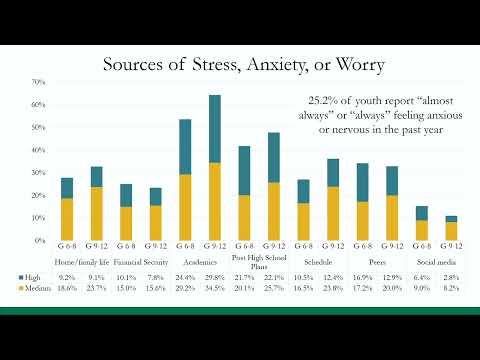
Consultants told the Norwich council that a recent anonymous survey of grades 6–12 had a 71% response rate and found 11.6% of respondents (261 students) had seriously considered suicide in the past year; among those, 48.1% made a plan and 31.2% reported an attempt. Presenters outlined prevention programs and offered follow‑up data.
Bonnie Smith, an analyst with the council’s consulting partner, told the Norwich council that an anonymous December survey of grades 6–12 achieved an overall response rate of about 71 percent and shows some areas of concern for youth mental health.
"About 11.6 percent reported that they had seriously considered suicide in the past 12 months — that was 261 students," Smith said, adding that follow‑up questions showed 48.1 percent of those students had made a plan and 31.2 percent had attempted suicide (the 31.2 percent refers to the subgroup of 261 students, not all respondents).
The survey also found roughly 19.1 percent of students reported prolonged feelings of sadness or hopelessness and 33.4 percent reported feeling lonely often; middle‑school students recorded higher rates on several measures than high‑school students, Smith said.
Hannah Orinburne, the city’s drug prevention coordinator, described how the Norwich Prevention Council uses those survey results to guide programming. "We run First Step as a school suspension alternative, Sunny Side Up in elementary schools, a 7 Challenges counseling program at NFA, NARCAN trainings, and Teens Empowering Norwich," Orinburne said. She added that the council also hosts the annual Rose City Block Party to reach families and provide resource tables.
Orinburne said the council is concentrating on expanding parent outreach — by attending sporting events and parent‑teacher gatherings — and on strengthening connections between school referrals and counseling resources. "We want to bridge the gap between the resources that are available here in Norwich and the students knowing about them," she said, and noted the council is considering a required parent component for repeated school substance incidents.
Bonnie Smith explained the district comparison used in the presentation: Norwich was shown against District Reference Group H (DRG H), a state grouping that includes Ansonia, Danbury, Derby, East Hartford, Meriden, Norwalk, Norwich, Stamford and West Haven. Smith said the state’s DRG lists are available and offered to provide the group list and supplemental data to the council.
An attendee asked how the survey defines an "attempt." Luke Smith, the consulting partner’s lead analyst, said the instrument asks an initial yes/no question about whether a respondent has considered attempting suicide in the past 12 months and then asks follow‑ups (yes/no) about making a plan, attempting, talking to a friend or trusted adult, and whether they knew where to get help. He noted that crisis‑line information appears beneath those items on the survey.
The consultants reported favorable trends on some measures since the 2021–22 baseline: self‑reported prolonged sadness fell from about 30.4 percent to 19.1 percent, and consideration of suicide declined from 14.3 percent to 11.6 percent, though Smith cautioned some rates remain higher than the comparison group in places.
On substance use, Smith said alcohol remains the most commonly reported lifetime substance; past‑month rates for 12th graders were roughly 7.1 percent for alcohol, 6.4 percent for marijuana/THC and 3.7 percent for nicotine vaping. Sources reported by youth were primarily peers for vapes/THC, alcohol obtained at home with parental permission, and prescription drugs taken at home without parents' permission.
Council members asked whether presenters have trend data on repeat school offenders. Orinburne said the council works closely with school resource officers and administrators, typically refers repeat‑offending students to 7 Challenges, and can request or supply trend documentation from school contacts.
The presenters offered to provide the DRG community list and the exact survey wording for the council’s review. The presentation concluded with the council thanking the team; no formal motion or vote was taken.