Get Full Government Meeting Transcripts, Videos, & Alerts Forever!
Get email alerts on the Vehicles For Hire topic
No spam. Unsubscribe anytime.
St. Augustine commissioners weigh tighter rules for pedicabs, franchises and horse carriages
Summary
City staff proposed a wide-ranging overhaul of vehicle-for-hire and franchise rules, including caps on pedicab operators, higher insurance minimums, stronger penalties and heat- and hour-based protections for horse-drawn carriages; local operators urged enforceable ID, grandfathering and affordable fees.
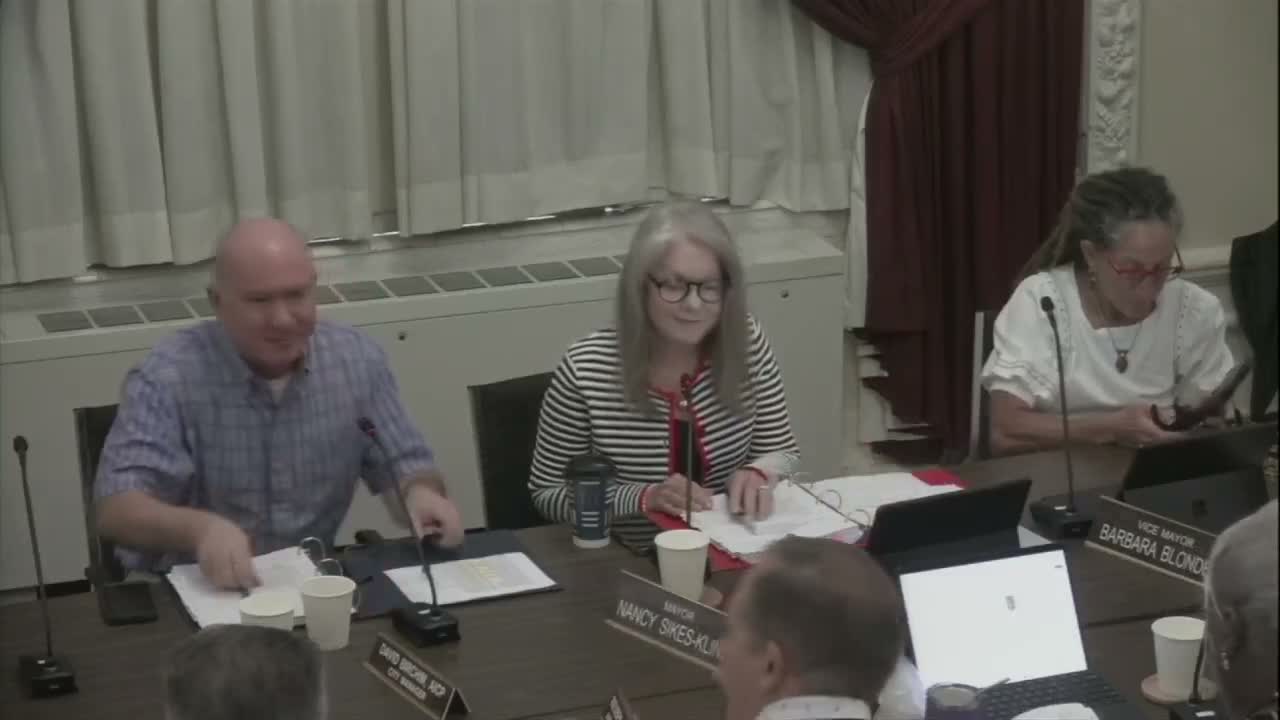
St. Augustine commissioners held a workshop to discuss a proposed overhaul of the city's vehicle-for-hire and franchise ordinances, with staff asking for direction on caps, fees, penalties and animal-welfare rules and dozens of local operators and residents weighing in.
Assistant City Manager Ruben Franklin told the commission staff had reviewed the ordinances and prepared redlines and background tabs showing roughly 56 registered vehicle-for-hire businesses, about 20 businesses that would qualify as the proposed "tier 2" franchise, and about 15 licensed pedicab operators. He said staff's draft would raise certain insurance thresholds, add impoundment for unlicensed operators and create an administrator to log and enforce licenses.
The discussion centered on several cross-cutting decisions: how many pedicab operators and vehicles to permit in the historic district, whether to grandfather existing operators, how high insurance minimums should be, the size of franchise fees, and how to protect horses from heat and overwork.
Several small operators said they support regulation if it is enforced, but urged the commission not to adopt rules that would put them out of business. "We're not the problem," said Joshua Luke, a local pedicab operator. "If you raise insurance minimums to a million-dollar combined policy, that will shut me down. I can't afford that."
Larger franchise operators and long-established sightseeing companies urged stricter limits and tougher enforcement to prevent outsiders from flooding the market during peak events. "We're very concerned about adding 45 tier-2 operators in 20 square blocks," said Ed Swift of Old Town Trolley Tours, noting his company pays a franchise gross-share to the city and carries multimillion-dollar insurance. "Regulation is needed. We support it, but protect the public."
Commissioners debated several numeric options. One staff scenario would allow 15 operators with up to 3 vehicles each (45 vehicles total). Some commissioners favored a lower long-term cap -- for example, 15 operators with two vehicles each (30 total), achieved over time through grandfathering and attrition. Staff said it could use a lottery if applications exceed the cap.
On enforcement, commissioners agreed on the need for visible, easy-to-spot identification for licensed vehicles and a single vehicle-for-hire/franchise administrator to maintain a log. Staff said impoundment could be added as an enforcement tool for unlicensed operators and that progressive discipline could combine warnings, fines and suspensions for repeat violators.
Noise and conduct rules were also on the agenda. Several commissioners favored banning amplified music on pedicabs and adopting a city code-of-conduct for commercial operators; the city attorney warned about balancing commercial-speech limits with First Amendment protections but agreed decorum standards are feasible for regulated businesses.
Horse-carriage safety drew strong public comment. Staff recommended, with input from University of Florida equine specialists, limiting days of work and using wet-bulb globe temperature thresholds to reduce heat risk; staff also proposed capping daily hours and specifying rest breaks. Animal-welfare advocates urged a faster transition to electric carriages, while carriage drivers said they already follow safety practices and warned that electrics have maintenance issues.
Insurance and fees prompted a sharp divide. Staff recommended a $1,000,000 combined policy for tier-2 and carriage operators (above the state minimum), saying it would better protect the city; smaller operators pushed back, saying their current commercial premiums already run into the low five figures and that higher minimums could force many out of business. Commissioners asked staff to return cost estimates and sample premium quotes at first reading.
On franchise selection, staff proposed three options: disqualify applicants with a recent record of noncompliance; allow previously noncompliant applicants but ban them from reapplying if they lose a franchise under the new code; or start with a clean slate. Commissioners discussed time-limited probationary windows as a compromise, and staff said they would draft language and criteria for the commission.
Several speakers urged grandfathering existing local operators so long-time providers are not immediately displaced; staff proposed allowing current businesses to apply for tier-2 status while preserving a cap that would be enforced in future openings.
The meeting closed with commissioners directing staff to incorporate the workshop feedback and return the revised ordinances for formal first reading. No votes were taken at the workshop.
What's next: staff will revise the draft ordinance to reflect the commission's direction (caps, enforcement language, penalty structure and animal-welfare limits), prepare fee and insurance impact estimates, and bring the ordinance back for first reading and further public comment.