Get Full Government Meeting Transcripts, Videos, & Alerts Forever!
Get email alerts on the Teacher Compensation topic
No spam. Unsubscribe anytime.
Board approves targeted $1,500 differential-pay plan after hours-long debate
Summary
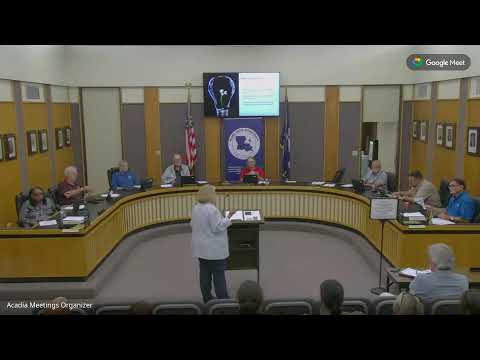
Acadia Parish School Board approved a targeted differential-pay compensation plan intended to retain certified teachers at high-need schools after extended debate over fairness, effectiveness and whether a one-time $1,500 payment would meaningfully address staffing challenges.
The Acadia Parish School Board voted to approve a targeted differential-pay compensation plan aimed at retaining certified teachers at the district's highest-need campuses after an extended public and board debate.
Board members discussed two funding options staff presented and repeatedly questioned whether a one-time $1,500 payment to certified teachers would be sufficient to improve retention. One board member argued that a $1,500 lump sum “is only a little over $100 a month, and it’s a onetime thing; I don’t think that’s gonna keep me here,” and said the board should consider broader or different incentives rather than a small, targeted payment.
The district superintendent defended the approach as a focused first step intended to address staffing at struggling schools. The superintendent said, “That option 1 was simply a first stab at Acadia trying to do something different to address how the guidance document says we should allocate those funds in a way to try to make a difference to retain, to recruit teachers.” He acknowledged the trade-offs between targeting limited state-directed funds and providing universal appreciation payments.
Public commenters and some board members pressed the board on equity and practical effects. Several speakers said rewarding certified teachers at struggling schools risks leaving high-performing teachers elsewhere feeling unrecognized; others said targeted funds are necessary to attract instructors to harder-to-staff campuses. Dr. Cummings, speaking during public comment, emphasized that class-size and local conditions differ across wards and that a one-size-fits-all response will not resolve underlying challenges.
After discussion, a motion to adopt the district’s differential-pay approach (option 1 as presented) was made, seconded and carried by the board.
How this will be administered, and whether the board will revisit broader compensation strategies, were left as next steps; staff indicated the proposal would be forwarded for full-board approval or implementation steps as appropriate.