Get Full Government Meeting Transcripts, Videos, & Alerts Forever!
Get email alerts on the School Budget topic
No spam. Unsubscribe anytime.
Saranac Lake Central School District proposes $39.8M budget, schedules May 19 vote
Summary
District presenters reviewed a $39,831,000 proposed 2026-27 budget that relies on property taxes for roughly 65% of revenue, will draw $2.9 million from reserves for buses and reconfiguration costs, and puts a $360,000 bus purchase proposition on the May 19 ballot.
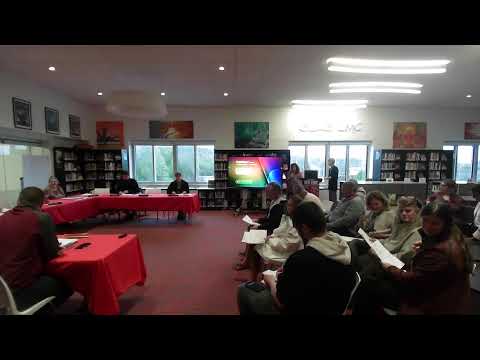
Saranac Lake Central School District officials presented a proposed $39,831,000 budget for 2026-27 at a public hearing on May 6, outlining rising costs, planned uses of reserve funds and details for a May 19 budget vote. Presenter said the hearing was intended to "walk through our budget, explain how the budget was developed and answer any questions."
The presentation from district staff detailed revenue sources and spending pressures. "Our total proposed budget is $39,831,000," the Staff member said, and property taxes make up nearly 65% of the revenue (about $28.26 million), with state and federal aid roughly 26% and the fund balance about 7.4%. The staff estimate for the 2026-27 tax rate is $7.28 per $1,000 of assessed value, noting it will vary by location.
Officials framed the budget around three state-required componentsadministrative, program and capitaland said the program component remains the largest share. Presenter emphasized that the district has tried to prioritize student programming while responding to long-term fiscal pressures and recent district reconfiguration plans.
Rising benefits and insurance costs featured prominently. Presenter said insurance costs increased by about $43,000 this year and are expected to rise at least another $15,000 next year; they also reported that the deductible is scheduled to increase from $5,000 to $15,000. "A good budget is a year round process," the Presenter said, and officials described these increases as part of broader inflationary pressure affecting contracts, fuels and utilities.
The board will use reserves to smooth the levy impact: staff said the district plans to use approximately $2.9 million of fund balance to offset the 2026-27 levy and to fund bus purchases and a district business office move tied to reconfiguration. Staff noted the state limit on unassigned fund balance (4%) when describing reserve policy and the rationale for using some reserves now.
Voters will decide the budget on Tuesday, May 19 (8 a.m. to 8 p.m., at Door 5). The ballot includes the $39,831,000 budget and a transportation proposition authorizing up to $360,000 to purchase two buses and related incidentals such as radios and panels; the district also will collect a library tax levy on behalf of the library. Staff member said absentee ballots must be received by district clerk Gina by 5 p.m. on May 19 for them to be counted.
Officials also outlined staffing changes included in the proposal: presenters said there are staffing reductions in next year's budget but added that all but one are anticipated to occur through vacancies. One employee will be placed on the preferred eligibility list because of redundancy arising from reconfiguration. Presenter said roughly three-quarters of the budget is tied to salaries and benefits and cited a 22% increase in health insurance costs and a 19% increase in workers' compensation as drivers of benefit cost growth.
Two board seats are on the ballot as terms for Joe Henderson and Mike Martin expire; both incumbents are running for re-election and Scott Dixon is also a candidate. Staff member reminded voters that write-in ballots requiring two names will be counted only if exactly two names are entered.
During audience Q&A, a resident asked about shopping for insurance. Staff explained the district participates in a consortium of 14-15 school districts that pools funds for coverage rather than being self-funded, which is typical for many districts. When asked why the district is not using a higher percentage of the tax cap, staff said the state—alculation adjusts the nominal 2% cap for debt service and other inputs, resulting in a 0.75% allowable increase this year.
The presentation closed with logistics for voting and a reminder that detailed budget materials and the presentation are available on the district website under Departments > Budget. The May 19 vote will determine whether the propositions are approved; no formal board action was taken during the hearing.