Get Full Government Meeting Transcripts, Videos, & Alerts Forever!
Get email alerts on the Data Centers topic
No spam. Unsubscribe anytime.
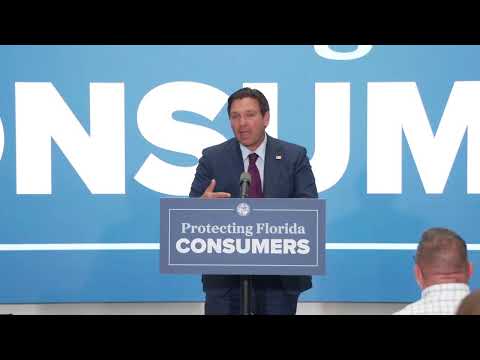
Gov. Ron DeSantis signs bill aimed at preventing data centers from raising utility bills for Floridians
Summary
Gov. Ron DeSantis and Commerce Secretary Alex Kelly celebrated passage of Senate Bill 484, which they said preserves local land-use authority, requires public review of water permits for data centers and prevents utilities from passing hyperscale data-center costs onto residents.
Gov. Ron DeSantis said at a bill-signing event in early May in Lakeland that he will sign Senate Bill 484, legislation designed to stop hyperscale data centers from shifting electricity and water costs to individual Floridians and to preserve local land-use control.
The governor said the law protects consumers by ensuring utilities cannot pass large-load costs to ratepayers and that local governments keep authority over comprehensive planning and development rules for large electricity users. "You should not pay one more red cent for electricity because of a hyperscale data center as an individual," he said.
Why it matters: DeSantis argued hyperscale data centers demand massive electricity and cooling water, produce few long-term local jobs once built, and have in some places received generous tax abatements. He described the bill as the first in the country to translate industry rhetoric about covering their own costs into enforceable rules on the ground.
Details from the text and remarks: DeSantis said SB 484 revises state law so local governments maintain authority to regulate large-load customers and includes definitions meant to prevent costs from being passed to consumers. He said utilities will have to develop minimum large-load tariff requirements for public electric utilities to protect Floridians from subsidizing these companies. He also said the bill "protects Florida's water resources from data centers draining our water resources." The governor pointed to recent drought conditions and to updated Florida Department of Environmental Protection and water management district rules that require data centers to apply for consumptive-use permits subject to public meetings.
Commerce Secretary Alex Kelly, who spoke after the governor, said the bill increases transparency in economic-development proposals and removes an exemption that formerly allowed certain projects to proceed without full public disclosure. "This bill removes a an exemption that previously for these kinds of economic development projects would have, while they're working their way through, hidden, you know, from the public eye," Kelly said, arguing the requirement will give communities tools to evaluate impacts on water and utilities.
The event included a question from an audience member about Polk County tax incentives for a proposed data center in Fort Meade. DeSantis criticized past practices of large abatements and said jurisdictions should charge data centers more if they choose to host them; he reiterated his view that communities should not subsidize utility costs for the wealthiest companies.
Implementation and next steps: DeSantis and Kelly framed the change as a regulatory and enforcement task for utilities, the DEP and water management districts; the DEP's November rule updates and local permitting processes were cited as immediate mechanisms for public review. The governor did not provide an effective date for SB 484 in these remarks. Formal rulemaking and utility tariff development will determine how the protections are applied in specific cases.
The governor closed by thanking the legislature and said the state will continue to monitor projects and ensure residents are not charged for data center impacts.