Get Full Government Meeting Transcripts, Videos, & Alerts Forever!
Get email alerts on the Opioid Settlement topic
No spam. Unsubscribe anytime.
Commissioners set advisory committee process, debate how to use roughly $400,000 in opioid-settlement funds
Summary
County staff outlined an advisory committee process and scoring rubric for distributing opioid‑settlement funds; commissioners debated whether to plan for about $400,000 in initial grants, multi‑year awards and whether to reserve portions to offset jail costs.
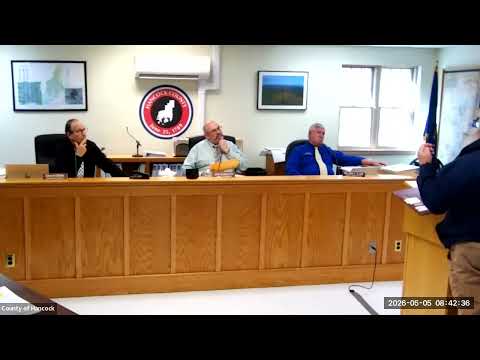
County officials on May 5 discussed how to manage incoming opioid‑settlement funds and approved forming an advisory committee to review applications and recommend awards.
County administrator (speaker 3) told commissioners the county has a current balance of roughly $764,550 from settlement allocations, plus a recent $16,000 payment, and circulated a draft GRAMA‑style application and scoring rubric for the committee to use. He said the county had tentatively “plugged into the budget” about $368,000–$369,000 and, including the recent payment, had roughly $411,478.85 available as a working estimate. "We could plan on about 400,000," he said, adding that the committee would bring recommendations back to the full commission for final award decisions.
Commissioners debated several approaches to distributing funds: allocating a large amount in the first year, capping individual grants, or reserving funds for multi‑year projects. One commissioner (speaker 2) suggested keeping the program flexible — "we could leave it loose for now" — so the committee can decide how many awards fit the applications received. Speaker 3 emphasized that committee recommendations would be advisory and that the commission retains final authority on awards.
Speakers noted competing priorities. Some commissioners warned against routing the bulk of funds to jail operations and urged that community organizations also be eligible. "If you're committed to it going out beyond the jail, you'll just have to deal with that as it comes," speaker 3 said. The group discussed potential caps (for example, $150,000 over three years versus $200,000 over two years) and whether to set aside a fixed annual amount to sustain multi‑year projects.
The commission did not adopt final award amounts at the meeting; instead, it scheduled the advisory committee to meet and asked staff to finalize application materials and likely funding scenarios for the commission’s later review. "Have the committee do all its work, come back with recommendations, and you guys get to decide at the end of the day," speaker 3 said.
Ending: The commissioners agreed to proceed with the advisory committee process and to keep the initial funding flexible; final award decisions will await the committee’s recommendations and subsequent commission votes.