Get Full Government Meeting Transcripts, Videos, & Alerts Forever!
Get email alerts on the Building Codes topic
No spam. Unsubscribe anytime.
Council adopts building-code updates; debate centers on flexible plumbing and egress rules
Summary
The council approved a municipal-code update adopting selected 2024 ICC provisions, prompting debate over new limits on corrugated/flexible plumbing fittings and an engineer-stamp requirement for certain foundation modifications; councilors asked staff to clarify language at third reading where appropriate.
The Laramie City Council voted 9–0 on May 6 to adopt changes to Laramie Municipal Code Chapter 15 that bring selected provisions of the 2024 International Code Council standards into local law.
The ordinance (original ordinance 21-21) updates multiple building-code sections. During public comment, several contractors and residents raised concerns about two elements: (1) a provision that limits corrugated or corrugation-style flexible plumbing fittings (sometimes used for temporary repairs or in tight retrofit situations), and (2) language that would require an engineer’s stamp when cutting new openings or modifying foundation elements.
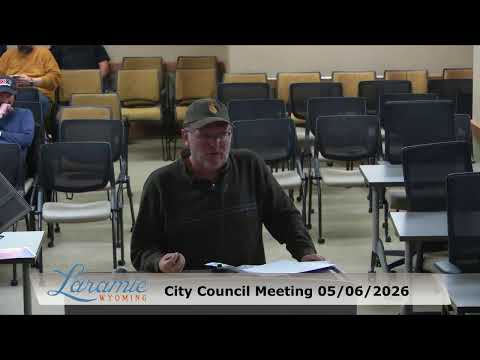
Contractor and public commenter Brett Glass urged the council to “consider striking” the proposed changes, saying the language could prohibit fixtures with flexible internal connections and make simple repairs more costly. Colin Rusinski, a local contractor, told the council that easing some code requirements had helped lower building costs and encouraged more infill construction.
Planning staff and building officials responded that the code language aims to prevent concealed fouling surfaces and long-term failure modes; Director Taney explained that interior-smooth flexible fittings are acceptable and that the ordinance places standard building-code provisions explicitly into the municipal code to provide clarity. Staff also said temporary connections used during construction are not intended to violate final inspection requirements.
Councilors discussed clarifying the text for third reading to ensure temporary or retrofit uses are not unintentionally prohibited and to avoid discouraging safe, common fixtures. Several council members said they were comfortable moving forward and would work with staff to clarify language before final adoption.
Outcome: Council approved the ordinance on second reading and moved it forward; councilors asked staff to refine wording and clarify the scope of the plumbing and foundation provisions ahead of final action.