Get Full Government Meeting Transcripts, Videos, & Alerts Forever!
Get email alerts on the Land Use Permitting topic
No spam. Unsubscribe anytime.
Gorge commission committee seeks study of ADUs and relief from steep NSA permitting fees after Multnomah County briefing
Summary
Multnomah County land use director Megan Gibb told the Columbia River Gorge Commission Economic Vitality Committee that National Scenic Area reviews can cost nearly $4,800 and may be disproportionate for small farm or tourism projects; the committee voted to recommend studying accessory dwelling units and the agricultural income test to the full commission.
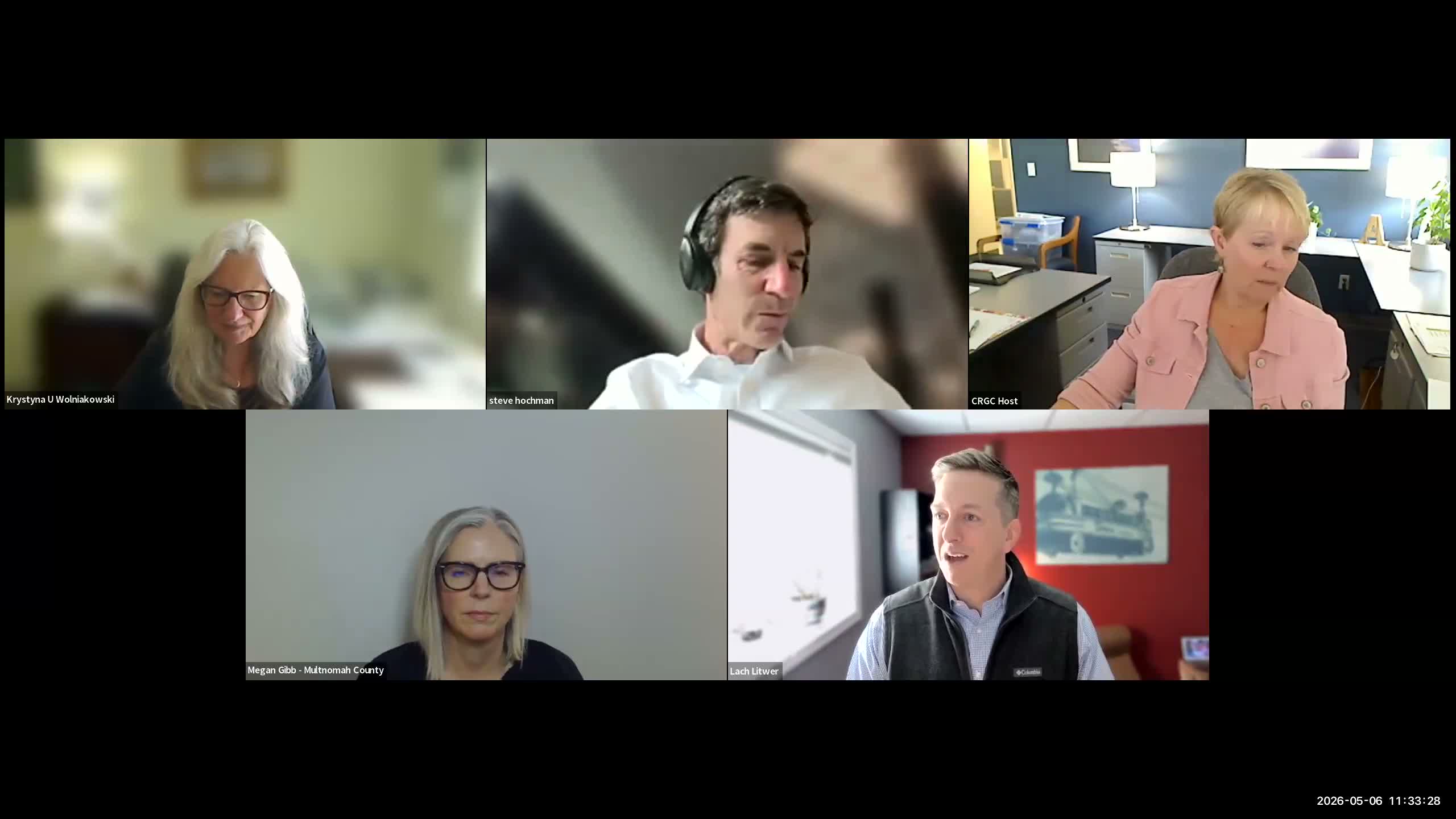
The Columbia River Gorge Commission Economic Vitality Committee voted to recommend that the full commission study accessory dwelling units and the agricultural income test after hearing a briefing from Multnomah County land use planning director Megan Gibb on permitting barriers inside the National Scenic Area.
At the committee’s May meeting, Megan Gibb said counties frequently hear from farmers and small businesses that current review thresholds and fees make modest, low-impact projects difficult to pursue. "For a full review, NSA review per project, it's almost $4,800," Gibb said, noting that fees were raised about 54% last year and a proposed increase this year would further move the county toward roughly 30% cost recovery. "We might be well beyond what that time is required," she added, arguing for a separate, expedited track for smaller or minimum-impact projects.
Why it matters: Committee members said the fee and review structure can be a practical barrier to agricultural operations, small commercial reuse and tourism services — especially in rural parts of the NSA where 90% of Multnomah County’s lands are farm and forest. Chair Loch Litworth framed the committee motion as a request for staff to quantify impacts so the commission can prioritize changes that reduce friction without undermining the NSA’s conservation mission.
Gibb flagged three priority areas for easing friction: farm economic viability and diversified incomes (farm incubators and fee sensitivity), flexibility for reusing historic commercial buildings (parking and modern development standards), and tourism-related services such as park-and-rides, shuttle operations and e-bike operators, which may be treated as commercial activity under current rules.
On accessory structures and ADUs: Gibb and commissioners debated whether the NSA’s 60-square-foot permit threshold for accessory structures still matches contemporary uses and equipment sizes. Gibb said that while ADUs and short-term rentals are often conflated in conversations, they are separate policy issues: "We do not currently support, we don't actually authorize short term rentals at all in Multnomah County," she said, adding that the ADU discussion could continue without automatically allowing short-term rentals.
Cultural-resource reviews and timing were cited as drivers of delay and cost. Commissioners asked whether the requirement to address cultural resources and SHPO review drives the high cost. Christina (county/commission staff) and Gibb said Forest Service archaeologists and cultural-resource specialists determine where more extensive testing is required and that private consultants can be hired to accelerate reviews, though Forest Service capacity remains a constraint.
Public comment underscored the political and local stakes. Mary, a local Grange president, urged more support for farmers — including tax relief and health insurance — and expressed opposition to ADUs in the NSA on conservation grounds, saying, "ADUs are there to make money. They're not for grandchildren and mother in laws and other things."
Formal action: Chair Loch Litworth moved that the committee recommend the full commission add ADUs and a deeper review of the agricultural income test to its next plan-review cycle; Commissioner Steve Hockman voiced support and members agreed to send the recommendation to the full commission for action. The committee asked staff to gather quantifiable data (application counts, project sizes, fee impacts, and instances where fees deterred applicants) to inform prioritization.
What’s next: The committee will ask staff to scope analyses of fee structures, the 60-square-foot threshold, and the ag income test, and to coordinate outreach to county planning directors and consultants to gather on-the-ground examples. The full Columbia River Gorge Commission will receive the committee’s recommendations at its next meeting for consideration.
Ending: The committee closed after agreeing to pursue the staff work and planned further committee involvement in reviewing the five-year economic vitality report and related outreach.