Get Full Government Meeting Transcripts, Videos, & Alerts Forever!
Get email alerts on the Market Infrastructure Grants topic
No spam. Unsubscribe anytime.
Agency official outlines $20M year-round market infrastructure grants from California Climate Bond
Summary
A Department of Food and Agriculture agency official described a proposed year-round market infrastructure grant program funded by California’s Proposition 4, detailing eligibility, award types, allowable expenses, equity set-asides and technical-assistance plans; a draft RFA will be released for public comment.
An agency official with the Department of Food and Agriculture presented details of a proposed year-round market infrastructure grant program funded by the 2024 California Climate Bond (Proposition 4), saying $20,000,000 was allocated to the program and that up to $18,450,000 would be available for infrastructure grants.
The official said the program’s purpose is to strengthen agricultural infrastructure that supports local food systems and expand market access for certified farmers markets, fishermen's markets and tribe-operated or Native-serving markets. “The year round market infrastructure grant program was funded and established by the Safe Drinking Water, Wildfire Prevention, Drought Preparedness, and Clean Air Bond Act of 2024, also known as the California Climate Bond,” the agency official said.
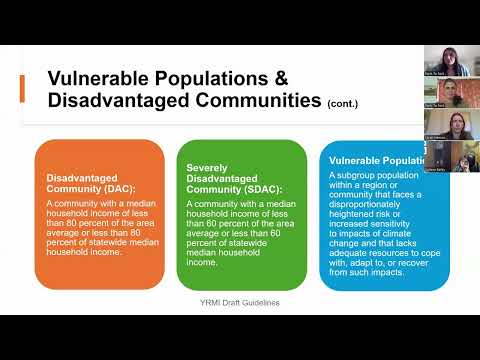
Why it matters: the program targets market infrastructure that can improve food access and support farm businesses, and the bond guidance requires at least 40% of program funds to go to projects that provide direct benefits to vulnerable or disadvantaged communities, with at least 10% reserved for projects benefiting severely disadvantaged communities.
Who can apply and key eligibility rules: the official said eligible applicants include public agencies, local agencies, nonprofit organizations, special districts, joint powers authorities, tribes, public utilities (including local publicly owned utilities) and mutual water companies. Applicants must be operating, be applying to begin operating, or apply on behalf of an eligible year-round certified farmers market, fishermen's market, or tribe-operated/Native-serving market. Markets must operate year-round to be eligible; seasonal markets may apply only if they submit a detailed plan and timeline demonstrating a transition to year-round operation.
Award types and allowable costs: the agency official described two proposed award types. Infrastructure-project grants would fund medium- and large-scale infrastructure at eligible year-round markets. Block grants would fund intermediaries that allocate smaller grants to multiple eligible markets; block grantees could use up to 10% of their total grant to provide technical assistance (staff time, materials, indirect costs). Allowable infrastructure examples include all-weather canopies and shade structures, market stalls and seating, tent weights and tie-downs, traffic-management barricades, cold storage and point-of-sale terminals to accept CalFresh and WIC and equivalent nutrition programs.
Application process, payments and advances: applications will be submitted electronically through Salesforce. The official said reimbursements are the typical payment method via invoicing to CDFA, with monthly, quarterly or annual schedules possible; reimbursements were described as expected approximately 90 days after invoice approval. Advance payments are allowed in some cases for up to three months of expenses, but bond guidance limits advances to no more than 25% of the total award at a time.
Equity and scoring priorities: technical reviewers will score applications to prioritize projects that serve priority populations, demonstrate clear climate benefits (for example energy-efficient cold storage), and show a track record of success or a strong project plan and realistic implementation timelines and budgets. Applicants must document how their project delivers at least one of the program’s listed meaningful and direct benefits to disadvantaged or vulnerable groups.
Technical assistance and outreach: the official said CDFA plans to provide application assistance through virtual webinars, weekly office hours, FAQs and review of draft application materials for eligible applicants, and noted that eligible recipients of draft-application review include California Native American tribes (federally and nonfederally recognized), tribal-led nonprofit organizations, and organizations led by historically and socially disadvantaged groups.
Other Climate Bond funding at CDFA: the official said Proposition 4 designates $255,000,000 for CDFA programs overall. Existing CDFA programs that may receive Climate Bond funding in 2026 include Healthy Soils and the State Water Efficiency and Enhancement Program; new programs slated for outreach and 2027 applications include a tribal food sovereignty program, a certified mobile markets program, regional farm equipment sharing, and expansion of healthy soils tribal practices.
Next steps: the agency team will use feedback from this session to draft the RFA, release the draft for public comment, respond to comments in the final RFA, and then open the application. The official asked for input on timing and award sizes and noted the timeline remains subject to change. The presentation concluded and the official turned the session over to a colleague to take questions from attendees.
Sources: Presentation by an agency official, Department of Food and Agriculture (CDFA).