Get Full Government Meeting Transcripts, Videos, & Alerts Forever!
Get email alerts on the Public Health topic
No spam. Unsubscribe anytime.
Provider proposes grant-funded mobile opioid treatment units for Hocking County
Summary
Joshua Becker of Anchor Addiction and Wellness told commissioners the group plans two grant-funded mobile opioid treatment units to serve Appalachian counties, offering medication, urine screening, telehealth and case management; the program is pending DEA clearance and asks for no county funds.
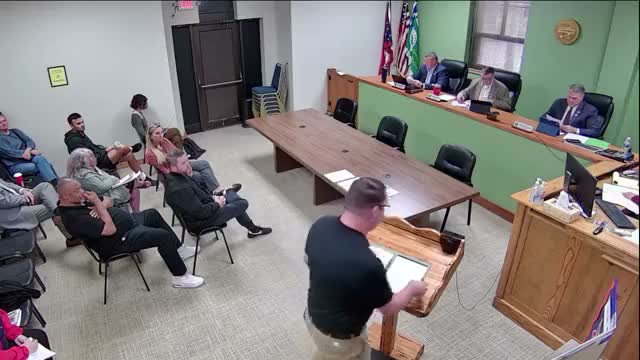
Joshua Becker, who said he represents Anchor Addiction and Wellness Center, told the Hocking County commissioners on April 30 that his organization plans to launch two mobile opioid treatment units to serve Appalachian and other underserved counties.
Becker said each unit will staff a nurse practitioner and two nurses, provide medical exams, medication-assisted treatment, urine screening sent to a laboratory, case management and telehealth counseling. “We will be launching and operating Ohio's first mobile opioid treatment units,” Becker said, adding the units will dispense medication, track doses and perform regular urine screens to reduce diversion.
Becker said the program is funded by a governor‑sponsored grant and that Anchor Addiction is not seeking county money. He said the program already has regulatory oversight commitments: the units will operate under DEA rules and state professional boards, and the provider is CARF‑accredited.
Commissioners and other speakers pressed practical questions about schedule and capacity. Becker estimated an intake and screening process takes roughly 45 minutes and said an eight‑hour service day could accommodate about eight new intakes, with established patients seen more quickly. He said route reviews will occur every 30 days to adjust stops and that advertising and scheduling will be run by the provider.
A commissioner raised concerns about methadone and safety. A committee member (S6) said methadone would be “the last of the medication that will be offered” and described clinical safeguards and storage practices; Becker reiterated that overnight medication storage is at a brick‑and‑mortar facility that supports the mobile work.
Becker also cited local need: “Hocking County alone had 10 overdose deaths within the first nine months of 2025,” he said, and added the program’s goal is to reduce overdose deaths and expand access where outpatient opioid treatment services are otherwise unavailable. He said the program currently awaits final clearance from the DEA before full deployment.
Next steps: commissioners offered to coordinate with Becker and county health and safety partners as needed; Becker said the units are grant‑funded, will bill Medicaid where applicable and, if a client has no insurance, grant dollars will cover treatment until other coverage is arranged.