Get Full Government Meeting Transcripts, Videos, & Alerts Forever!
Get email alerts on the AI Policy topic
No spam. Unsubscribe anytime.
Olentangy presents four-phase AI roadmap and emphasizes teacher-led guardrails
Summary
District Curriculum & Innovation leaders outlined a four-phase AI readiness roadmap stressing governance, vetted EDU tools, teacher expectations and continuous stakeholder engagement; board members pressed on academic integrity, developmentally appropriate uses and feedback loops.
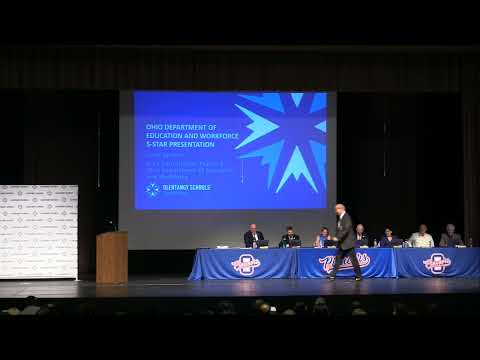
District curriculum leaders presented a four-phase roadmap for AI adoption at the May 7 Olentangy board meeting and answered board questions about academic integrity and developmentally appropriate use.
Brent Brewer said the district is treating governance and safety as the foundational pillar and described a vetting process that prefers education-specific tools that protect student privacy and do not train on staff or student data. He cited NotebookLM as an example of an EDU-focused tool that the district evaluated and approved for classroom pilot work.
David Hayward described the district’s four phases: building foundation (phase 1), infrastructure and procurement (phase 2), design/implementation (phase 3) and sustained adoption/monitoring (phase 4). He said the district is currently in phase 1 and has developed a readiness guide across six areas—leadership, infrastructure, stakeholder engagement, policy/governance, staff capacity and wellness—to help identify gaps and next steps.
During Q&A board members raised several concerns. A board member asked whether handbook language that labels “any use of AI” as plagiarism could unintentionally penalize students. Presenters recommended clarifying authorized vs. unauthorized use, designing assignments to require in-class work or revision histories, and setting expectations up front so teachers, students and families know when AI assistance is allowed. Presenters also emphasized educating teachers first and creating structured feedback from teachers and students through the readiness guide.
On the topic of developmentally appropriate use, presenters suggested non‑screen examples—robotics and hands-on sequencing activities for younger students—and reiterated that ethics and human-centered instruction must be embedded at each grade level. The district plans to continue stakeholder engagement, professional development and piloting with an educator cohort before wider rollouts.
Board members asked for continued transparency with parents and staff as policies and classroom practices evolve.