Get Full Government Meeting Transcripts, Videos, & Alerts Forever!
Get email alerts on the Facility Use Policy topic
No spam. Unsubscribe anytime.
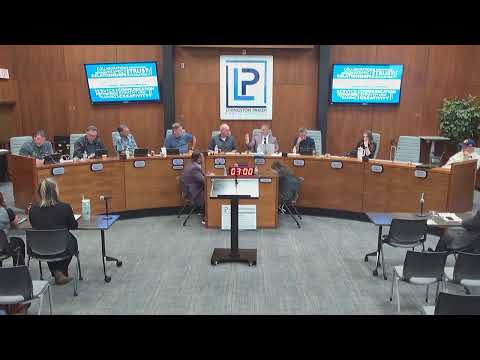
Livingston Parish board approves gym use for community forum after hours of public comment on carbon‑capture
Summary
After extended public comment and a legal debate over facility‑use policy, the Livingston Parish School Board voted to approve use of French Settlement High School gym for a planned town‑hall on carbon capture, with conditions and instructions to complete paperwork and insurance.
The Livingston Parish School Board voted to approve use of French Settlement High School’s facilities for a planned community forum on carbon‑capture projects after nearly two hours of public comment and board debate.
Councilman Dean Coates (District 8), who requested the facility use, told the board the meeting was intended as an educational town hall and cited state law when arguing for equal access. "The first one is Louisiana state law 17:81," Coates said, adding that written nondiscriminatory policies are required and that selective access "violates this law." He said organizers would supply insurance and asked the board to allow the event.
Principal (speaker 10) who canceled the initial reservation told the board he acted out of concern for student and staff safety after the event’s scope changed and community members began receiving threatening online messages. "I made the decision as principal of Prince Settlement High School based on what I believe was the best for the safety, stability, and well‑being of my school and community," he said, describing phone calls and social‑media posts that named school staff and displayed personal contact information.
Superintendent Purvis told the board he had sought legal advice and framed the issue as one of facility‑use policy and the board’s purview. "This is nothing to do with one side of carbon capture or the other," he said, adding that donations referenced by critics "were made directly to schools" for specific projects and not as payments to the district.
Board members debated two central questions: whether the altered scope and promotional flyer for the event changed it from a small educational town‑hall into a larger, potentially disruptive affair; and whether the district could lawfully refuse the request under its policy if the request was contrary to the "best interest of the school system." One board member compared the potential crowd to a high‑profile celebrity appearance as an example of an event that could create unsafe disruption.
Multiple residents—including Rebecca Roberts—urged the board to allow the forum, raising public‑health and property‑value concerns and saying residents should be allowed to discuss groundwater and safety. Roberts told the board she reviewed district budget materials and said she had documented donations that she characterized as relevant to the debate. "So let me ask you, whose money is more important? The taxpayers or the guys that are gonna pollute your ground?" she asked.
After discussion the board made a motion to approve the facility use, with the applicant asked to confirm the application details (including insurance and the specific gym space to be used). The motion was seconded and carried by voice vote. Board members asked organizers to underline the approved location on the flyer (the old gym versus the playing gym) and to finalize required paperwork before the event.
What happens next: the board approved facility use contingent on completing the facility‑use application, providing insurance, and clarifying which gym will host the event. Board members also requested that the policy committee review facility‑use language so the procedures and limits are clearer in the future.
The board recorded no roll‑call tally in the meeting minutes; the motion passed by voice vote and the chair declared it carried.