Get Full Government Meeting Transcripts, Videos, & Alerts Forever!
Get email alerts on the Intergovernmental Services topic
No spam. Unsubscribe anytime.
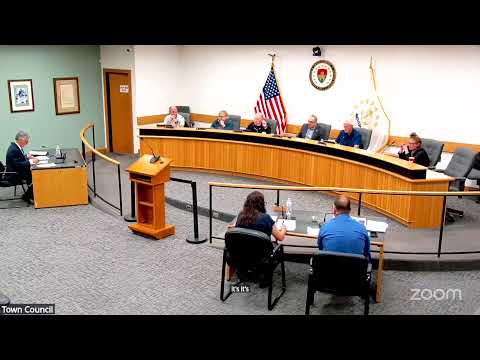
Council hears proposal to allow fire districts to use Coventry fuel island and undercarriage wash; staff to return with MOUs and regulatory review
Summary
Fire districts asked to buy fuel at 5¢ above town cost and use the DPW undercarriage wash at $8 per wash; council members raised tracking, insurance, DEM (UST) compliance and reserve-fund questions and directed staff to draft MOUs and check state rules before proceeding.
Councilors discussed a proposal from regional fire districts to use Coventry’s fuel island and undercarriage wash to refuel and clean emergency vehicles.
The town’s present offer would charge fire districts 5¢ per gallon above the town’s cost for fuel and $8 per undercarriage wash to cover chemicals and equipment. Director McGhee (DPW) described the wash’s purpose—to neutralize salt and mud—and cited operating costs, including neutralizing solution drums near $1,000 each and additional electrical costs.
Council member Hoole challenged the financial assumptions and tracking: "I don't agree with the town making 5¢ a gallon on the fuel for the fire departments," he said, and pressed staff on how many washes occurred and who was using the system. Councilwoman Capaldi asked for a usage log so the town can justify costs and measure savings. Councilwoman Iannotti warned the council to memorialize any sharing arrangement: she cited "Law 45-39-1" and said intergovernmental agreements must be filed and that selling fuel commercially could change underground-storage-tank permitting and DEM oversight.
Town staff and the manager said they would pursue certificate-of-insurance requirements, draft memoranda of understanding or agreements, check underground storage tank compliance with DEM and examine whether selling fuel to districts would trigger different permitting. The council did not vote on the proposal and asked staff to return with those clarifications.
Councilors emphasized the goal of long-term savings from reduced maintenance costs if undercarriage cleaning prolongs vehicle life, but said any program must include clear tracking, reserve funding for repairs and explicit insurance arrangements so taxpayers are not exposed to unexpected costs.