Get Full Government Meeting Transcripts, Videos, & Alerts Forever!
Get email alerts on the Police Staffing topic
No spam. Unsubscribe anytime.
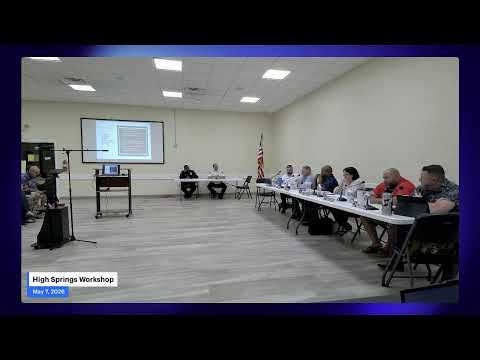
High Springs examines policing options as recruitment, overtime and budget squeeze bite
Summary
The police chief told the commission staffing shortages, long hiring/training lead times and overtime pressures make maintaining current service costly; staff presented sheriff —ontract options that would be more expensive than current municipal policing and discussed vehicle policies, SRO costs and potential savings tied to inspections or fee changes.
High Springs police leadership told commissioners that recruitment and retention challenges are creating operational strains that increase overtime and risk longer response times.
The police chief outlined the department eployment model (two 12‑hour shifts with a swing shift) and said the state guidance from the Florida Department of Law Enforcement suggests about 2.3–2.5 officers per 1,000 residents, which for High Springs —stimated population would imply about 16 patrol officers. The chief said the department currently fields roughly 14 officers in patrol and that vacancies can remain open 8–10 months because pre‑employment screens and training can take three to four months each.
Outsourcing options and costs: Staff presented two county contract scenarios discussed with the sheriff's office. One basic coverage model (one deputy) was estimated at about $2.2 million and a more complete two‑deputy model at roughly $4.4 million; both figures exclude potential schoolboard or county contributions. Commissioners noted those numbers appear higher than current municipal costs and would require a careful legal and fiscal analysis before any decision.
Operational details and tradeoffs: Commissioners discussed take‑home vehicle policies, which the chief defended as improving responsiveness and retention, and asked whether food trucks, Airbnbs and other commercial or institutional properties could be a source of increased inspection fees to raise revenue. The manager and chief agreed that updated inspection and licensing fees are a plausible incremental revenue source; the fire department already requires inspection fees for new businesses and some food trucks.
Public comment and community concerns: Residents voiced strong support for keeping local police services. One resident recounted how rapid local response was crucial in a family emergency; others urged the commission to explore new fees and creative revenue streams rather than cutting services.
Next steps: Commission members asked staff to gather additional cost comparisons with neighboring municipalities, confirm the sheriff —ontract details, and evaluate revenue options (impact fee studies and potential inspection fees) before making formal budget decisions.