Get Full Government Meeting Transcripts, Videos, & Alerts Forever!
Get email alerts on the Investment Policy topic
No spam. Unsubscribe anytime.
Coffee County committee reviews investment policy after trustee reports $3.8 million yield in 2024
Summary
The Coffee County Investment Committee discussed a draft investment policy Feb. 18 after a state comptroller recommendation, focusing on whether policy language conflicts with the county tax levy for restricted funds and on the trustee’s recent use of Treasury bills that produced roughly $3.8 million in 2024.
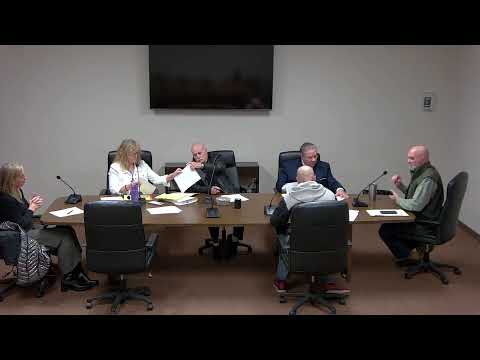
Chair Dennis opened the Feb. 18 Coffee County Investment Committee meeting to review a draft investment policy circulated after a Tennessee Comptroller recommendation.
The committee spent most of the session debating language under "safekeeping and custody" that Trustee John Marstonia said could conflict with the county's tax levy for restricted funds. Marstonia told the committee he wanted the minutes amended to reflect that on Dec. 14, 2022 the investment committee approved a non-corporate resolution to invest in U.S. Treasury bills and to authorize signatures for that action. He cited Tennessee Code Annotated §5-8-301 as the legal framework for allowable county investments.
"Tennessee Code Annotated 5‑8‑301 ... authorized investment states that counties are authorized to invest in ... United States Treasury bills," Marstonia said, and he argued the draft policy should not create an avenue to override the tax levy’s allocation of interest on restricted funds. The committee read Section 7 aloud, which lists specific restricted funds (library committed funds, opioid settlement funds, judicial drug task force funds and others) and states the balance of interest will accrue to the general debt service fund "unless otherwise specified by law."
Chair Dennis and other members repeatedly pressed Marstonia to explain recent investment results. Dennis summarized historical yields for the committee: "2019 about $426,000; 2020 about $478,000; 2023 about $972,000; and 2024 about $3,835,832," and asked how the 2024 increase was achieved. Marstonia replied that the investment committee and the legislative committee approved purchasing Treasury bills beginning Dec. 2022 and that about 60% of county funds—roughly $25 million—were invested in six‑month Treasury bills to capture higher yields. "I have a responsibility to invest out of funds at the maximum amount, and that's exactly what I did," he said.
Committee members raised two practical concerns: cash‑flow timing (ensuring enough funds are available each month to pay payroll and other obligations) and the operational burden of requiring committee members to sign for routine investments. Marstonia proposed adding a designated investment officer to the policy (he indicated he would serve in that role), arguing that an officer can make timely decisions within the constraints of TCA §5‑8‑301 and then report to the committee.
Members agreed to circulate a March 2024 draft of the policy that Marstonia said he had prepared and to meet again the following week to review changes. The committee also asked staff for clearer monthly estimates of expected disbursements so investment decisions would not impair cash flow.
The meeting recorded a formal vote earlier to approve the March 11, 2024 minutes: Commissioner Hollingsworth moved, Commissioner Smith seconded, and the minutes were approved by voice with five ayes and one opposition (Trustee John Marstonia).
The committee set a tentative follow-up meeting for Monday, Feb. 24 at 8:30 a.m. to review the circulated March 2024 draft and to discuss signature and internal‑control language.