Get Full Government Meeting Transcripts, Videos, & Alerts Forever!
Get email alerts on the Funding And Advocacy topic
No spam. Unsubscribe anytime.
Council discusses flexible funding pool, ARPA sunset and how HPC should liaise with state lobbyists
Summary
Committee updates highlighted a proposal for a local flexible funding pool to support rental assistance and supportive services; members urged clearer pathways to Metro’s lobbyist and more timely notices about funding opportunities as ARPA-funded programs near their end.
The Homelessness Planning Council heard committee reports that emphasized funding continuity as federal and ARPA-backed programs begin to sunset and discussed how the council should connect to Metro’s lobbyist and the state legislature.
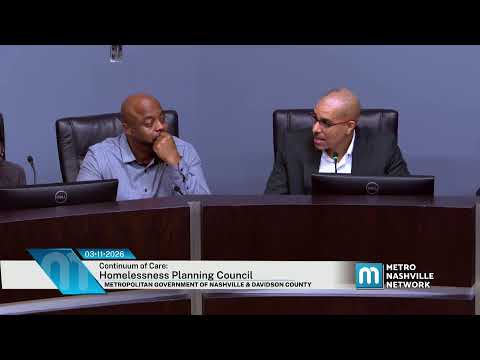
David Langel Martin (speaker 5), reporting for the Housing Opportunities Committee, described work to create a flexible funding pool that would combine capital and operating subsidy partners — philanthropy, banks, businesses and government — to provide rental assistance and supportive services. “One of the things we realized pretty early on is we’re going to need to limit the scope of the committee and try to be a facilitator rather than a task force,” he said, describing a focus on convening potential funders and aligning with the HPC strategic plan.
Members asked whether similar funds already exist. Martin said the Barnes Fund focuses on construction and noted Metro has approved some flexible dollars that are being piloted for rental assistance; the committee will track those pilot results to encourage further investment.
Members also raised concerns about replacing services funded by ARPA once the one-time dollars end in June. Kenna (speaker 14) and April (speaker 15) described contingency planning: April noted an ARPA report in the meeting packet and said OHS is working with funded agencies on monitoring and audit follow-up, and that funding opportunity notices are typically shared via constant contact and the COC listserv.
Council members pressed for a clearer pathway to influence or inform the Metro-contracted lobbyist on bills affecting homelessness policy. Metro staff (speaker 16) said Metro already retains a lobbying firm and the mayor’s office and council contract with lobbyists; however, HPC issues are routed to lobbyists only when staff or members bring legislation or concerns to the administration’s attention.
Kelly (speaker 18) later presented HMIS statistics for February: 4,094 individuals experiencing homelessness in the month (3,391 households, including 223 families and 499 children), 12,527 unique individuals in the last 12 months, and 172 individuals housed in February (100 households, including 32 families).
No formal votes were taken because the meeting lacked quorum. Staff agreed to report back on pilot funding results, to clarify the pathway for legislative liaison and lobbying communications, and to circulate grant- and RFP-related resources to the COC/HPC mailing lists.