Get Full Government Meeting Transcripts, Videos, & Alerts Forever!
Get email alerts on the Education Sabbatical topic
No spam. Unsubscribe anytime.
Heather Oversteeck describes Finnish classrooms, urges structured outdoor time and low-tech basics
Summary
At the May 4 Steamboat Springs School District meeting, teacher and interventionist Heather Oversteeck summarized a seven-week sabbatical in Finland, highlighting structured outdoor learning, paper-and-pencil instruction and multiage practices as potential, incremental ideas for local classrooms.
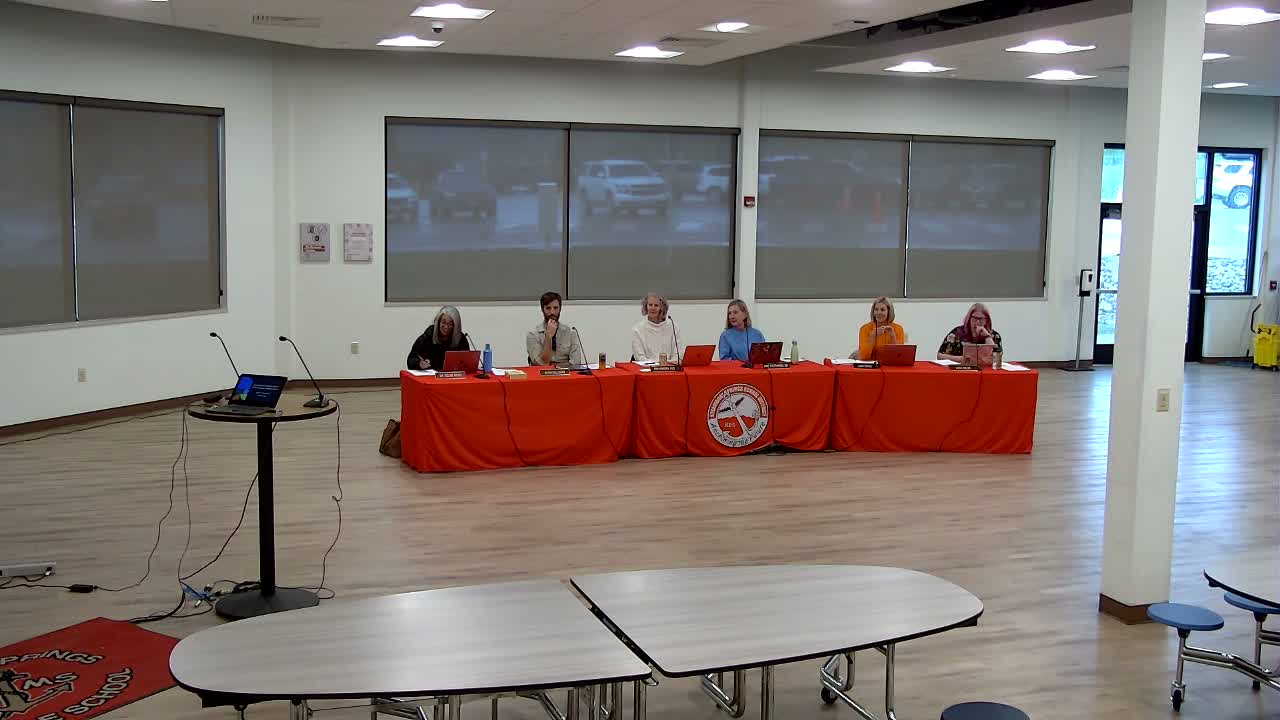
Heather Oversteeck, an interventionist who spent seven weeks studying primary schools in Finland, told the Steamboat Springs School District board on May 4 that the Finnish approach emphasizes structured outdoor learning, low-tech classroom routines and strong social-emotional foundations.
Oversteeck said she studied a Swedish-speaking school near Helsinki (Espoo) that teaches Swedish, English and Finnish, and that the language instruction and early reading practices were tightly integrated. "I spent 7 weeks in the Vindaman school," she said, describing multi‑language phonemic instruction and the school's practice of introducing additional languages in third grade.
Why it matters: Board members said they wanted practical steps the district could adopt. Oversteeck recommended prioritizing concrete, implementable practices rather than wholesale change: structured blocks of outside learning, consistent small-group lunchtimes with the same adults and attention to handwriting and paper‑and‑pencil work in early grades.
Oversteeck described frequent, scheduled outside time that is "not recess" but a structured portion of the academic day: "Every every every 45 minutes, they're doing some structured outside time. It's not recess. It's very structured to what they're learning." She also noted that early-grade classrooms used pencils and paper extensively and minimized student devices in the classroom.
Board member Laura asked for a short list of things the district could implement easily: "If there were 3 things that we could implement easily?" Oversteeck suggested (1) make structured outdoor learning a regular priority, (2) experiment with stable, small-group lunchtimes so children eat with the same teacher or adults, and (3) re-emphasize handwriting and low-tech literacy practice in preschool–early elementary.
Jane pressed on how the Finnish schools measured and supported student well-being. Oversteeck said teachers layered emotional and social supports early—making sure children were "solid" emotionally before intensifying academics—and used predictable class groupings and rituals to build belonging. She described teachers eating lunch with the same small group each day to create a family-style context: "Every day, the teacher eats lunch with them... it turns into a family."
Dr. Celine Wicks, who introduced Oversteeck, affirmed that the practices aligned with district priorities and said staff would explore how some of these ideas could fit local conditions. When asked about testing, Oversteeck and Wicks said early assessments in Finland frequently rely on paper‑and‑pencil formats rather than student-held devices.
What the board will do next: Oversteeck said she hoped to return with specific implementation ideas; board members asked administration to bring possible pilot steps (such as increased outdoor learning blocks or classroom routines) to a future meeting for discussion. No formal policy or budget decision was made at the May 4 meeting.
Ending: The board thanked Oversteeck for the presentation and invited further proposals on how to adopt pilot practices locally.