Get Full Government Meeting Transcripts, Videos, & Alerts Forever!
Get email alerts on the Land Use Zoning topic
No spam. Unsubscribe anytime.
Public hearing on Nexus 42 townhomes draws neighborhood opposition over traffic, density and drainage
Summary
At a lengthy April 14 public hearing, residents opposed a proposed 82‑unit Nexus 42 townhome development, citing traffic on State Route 42 and Cox Road, school overcrowding and stormwater concerns; the zoning commission recommended approval but trustees postponed a vote to May 12.
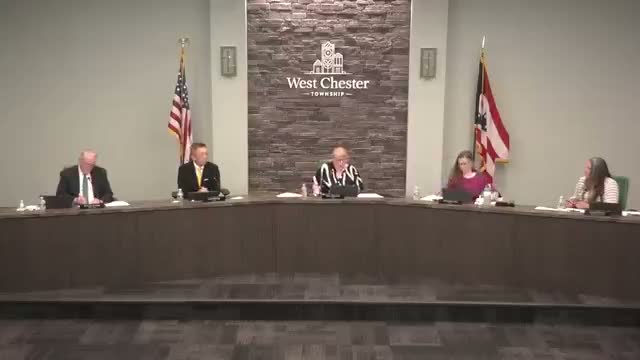
Trustees of West Chester Township held a public hearing on April 14, 2026, on ZMA01‑2026 (Nexus 42), a request to rezone 11.4 acres from R‑3 to RPUD and build 82 attached townhome units. The township’s interim planning consultant described the project as 19 buildings with about 7.2 dwelling units per acre and roughly 42% open space, with primary vehicular access from State Route 42 and an emergency‑only gate to Cox Road.
The applicant, Justin Lanham of MI Homes, described design and amenities, saying the HOA will own and maintain open space and that units would include two‑car garages and driveway parking. Lanham said the company’s local footprint includes 20 active communities and estimated sale prices in the mid‑$300,000s. “We will install the lock, and then we will turn the key over to the fire department, and they will have sole access to come in from Cox Road,” Lanham said, describing emergency‑access arrangements.
Neighbors raised repeated practical concerns. Darby Bodie told trustees that “82 units approximately 2 people per unit. That’s 164 additional potential cars going in and out,” and asked whether the single primary entrance would overload nearby intersections. Several speakers cited past local flooding and questioned whether the proposed wet pond and drainage plan would prevent increased runoff. David Sanders and other longtime residents said earlier retention and stormwater work in the area had failed to prevent flooding of nearby properties.
Technical testimony from Nick Selhorst of Choice 1 Engineering said the applicant’s traffic study estimates about 39 peak‑hour trips for the development and that a wet pond with water‑quality features is designed so post‑development runoff would be equal to or lower than current rates. Selhorst said the applicant submitted a traffic analysis to ODOT and was awaiting the state’s review, which staff said was expected around mid‑April given the 45–60 day window.
Trustees and staff debated whether the wet pond should count toward open‑space calculations and how buffering and setbacks would protect adjacent single‑family neighborhoods. The interim planning consultant said the PUD process allows conservation‑minded design and more continuous buffering than traditional straight zoning, while several residents said the proposed density and character were inconsistent with the township’s suburban single‑family designation.
Multiple speakers asked about rentals and long‑term management of units; MI Homes said it sells to homebuyers and does not impose township‑level rental restrictions, noting that HOA bylaws typically address lease restrictions. Residents also asked about school capacity, with one speaker noting an elementary school projected to be over capacity.
Staff read the resolution and told the audience the zoning commission had unanimously recommended approval. Chair closed the public hearing and said trustees would not vote that night; the decision on ZMA01‑2026 is scheduled for the May 12, 2026 trustee meeting.
The hearing record includes numerous written comments and in‑person testimony raising traffic, drainage, density and school capacity as substantive considerations that trustees said they would weigh before the May vote.