Get Full Government Meeting Transcripts, Videos, & Alerts Forever!
Get email alerts on the Public Records topic
No spam. Unsubscribe anytime.
West Chester Township police outline new fees and procedures for body‑worn camera records under House Bill 315
Summary
At the Feb. 10 meeting, Colonel Revels summarized changes stemming from House Bill 315 that let police charge for processing body‑worn camera video; the township said it will bill actual costs, notify requesters within five days and require payment before processing while retaining exemptions and limited fee waivers for victims and other identified parties.
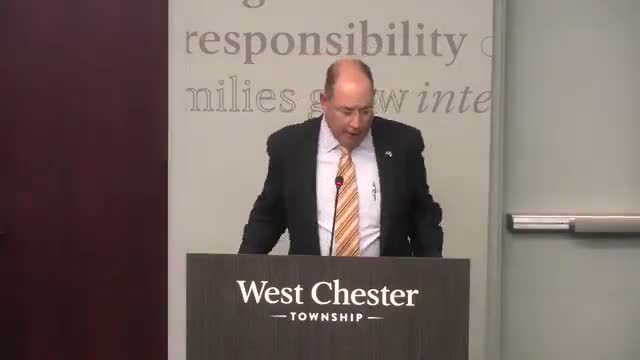
At its Feb. 10 meeting, the West Chester Township Board of Trustees heard an update from Colonel Revels on changes to public‑records handling of body‑worn camera footage following House Bill 315. Revels told trustees the law, signed Jan. 2, 2025 and effective April 3, 2025, was intended to reduce administrative burdens created by high‑volume social‑media‑style requests and permits departments to charge up to $75 an hour, capped at $750 per video request.
"We will charge the actual cost for that, not the maximum at this time," Colonel Revels said, explaining the township will calculate processing and redaction costs and notify requesters of the estimated fee within five days; payment must be received before staff begin processing. He said some categories of requesters can qualify for waivers or exemptions — for example, victims, legal counsel for a victim, courts, insurance or property owners — and that some requests require notarized proof of identity or authority as outlined in Chapter 149 of the Ohio Revised Code.
Trustees pressed staff on the labor involved in processing footage. Chair Miss Brown asked how many team members handle requests and how many hours redaction and review typically require; Revels replied that time varies with the incident, the presence of juveniles, undercover officers or confidential law‑enforcement information and noted redaction and supervisory review make the process time‑consuming.
Revels also summarized recent trends in requests: he cited increases in employee and interagency requests and a sharp rise in social‑media‑style requests through 2023 (a 139% increase described in the presentation), and said that after the law took effect those profit‑motivated requests declined.
Staff said the records office will email fillable forms to requesters, route communications through the records unit and publish updated guidance on the township website; the body‑worn camera coordinator and records staff will manage the process. No board action was required during the presentation.
The board did not vote on a local fee schedule during the meeting; Revels framed the discussion as an operational update and explained that statutory fee authority now exists, while the township intends to calculate and bill actual processing costs for requesters.