Get Full Government Meeting Transcripts, Videos, & Alerts Forever!
Get email alerts on the Education topic
No spam. Unsubscribe anytime.
Lakota leaders outline $200 million state match, timeline and tax impact for Nov. 4 bond
Summary
Lakota Local Schools Superintendent Ashley Whiteley and Treasurer Adam Zink told West Chester Township trustees and residents the district’s master facilities plan would consolidate buildings, add capacity and seek an estimated 32% state match; they said collections would begin in 2029 to limit taxpayer impact.
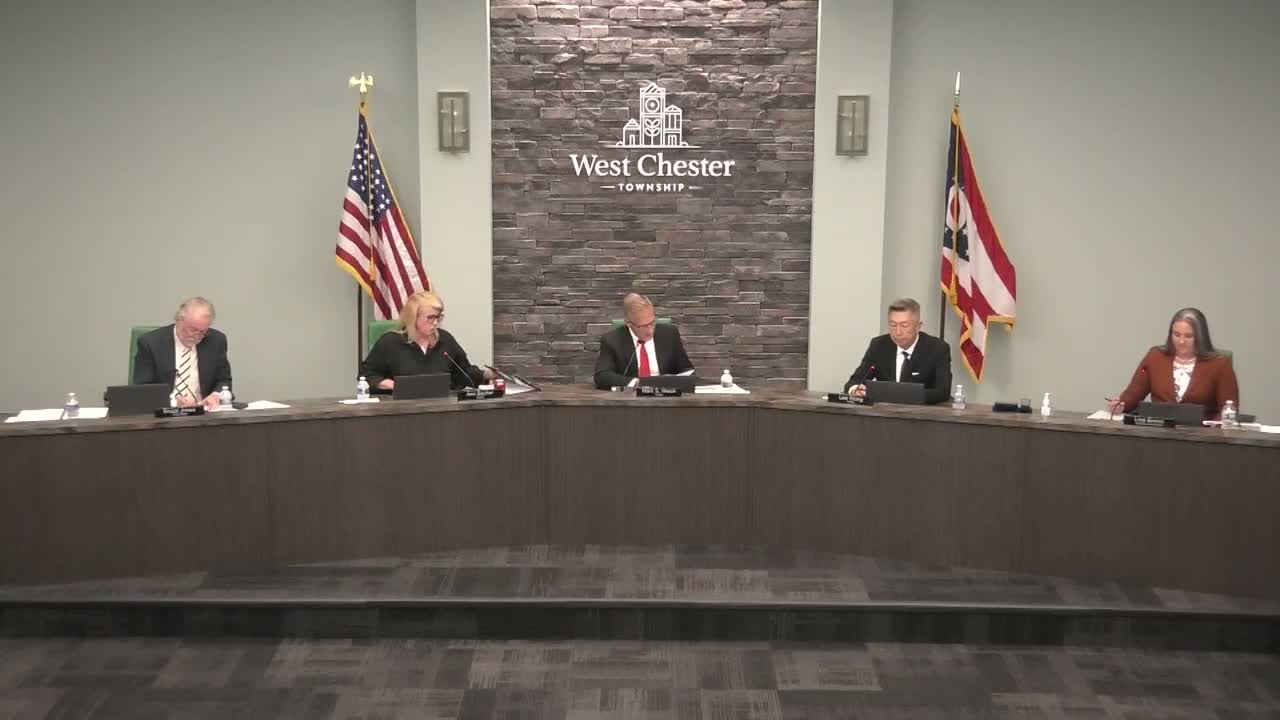
Lakota Local Schools Superintendent Ashley Whiteley and Treasurer Adam Zink presented the district’s master facilities plan and the Nov. 4 bond question to West Chester Township trustees and members of the public on Oct. 14.
Whiteley, who introduced the presentation as an informational update, said the ballot includes a 0.95 permanent improvement levy component and that the district’s board has adopted a resolution of intent to begin collection in calendar year 2029 to limit the immediate tax burden. “We are not here to persuade in any way, but really just to inform,” Whiteley said.
Zink outlined the district’s financial assumptions and timeline. He said the project would use the Ohio Facilities Construction Commission’s expedited local partnership (ELP) program and that the state’s share is roughly 32%. Zink said the full program could bring about $200 million back to the community over the life of the project and described a three‑phase construction schedule: phase 1 (middle/high school work) to be operational for the 2028–29 school year, phase 2 (pre‑K through grade 5) to be operational for 2029–30, and a final phase timed with state funds that is “around ’33 to ’35” to complete remaining work.
The district said the master plan would reduce the number of school buildings from 21 to 16 while increasing total square footage in new and renovated buildings to an estimated 1,050,362 square feet overall. Whiteley summarized that the reduced footprint would produce operational savings that could be repurposed to classroom programs. “That money can then be repurposed into programming,” she said.
Officials emphasized the projected taxpayer impact and how the district plans to limit it. Whiteley and Zink pointed to board resolutions intended to cap the net increase and to align the start of collections with a projected roll‑off of existing levies. Whiteley gave an illustrative figure: a net, modeled taxpayer impact of about $93.10 per $100,000 of auditor‑appraised value, which she contrasted with higher figures some voters might see on raw ballot estimates.
Residents pressed officials for specifics. Leigh Rudkey asked when collections would start and whether decommissioned school land could be sold or repurposed; Whiteley said land could be set aside for future enrollment needs, community uses or partnered projects and that decisions about selling buildings would follow state rules and board approval. A trustee asked whether a future board could accelerate the collection start date; Whiteley said such a change would be possible by vote but that the district intends to honor its stated timeline.
Supporters and skeptics addressed the board during public comment. Chris Hopper said new facilities and the state partnership would create operational savings and better learning environments; other residents warned about the long duration of bond schedules and possible tax pressures on seniors.
What’s next: informational sessions and resources are posted on lakotaonline.com/masterfacilities, and the district listed an October 24 noon Zoom session. The bond will appear on the Nov. 4 ballot; if voters approve it, the district expects phased construction to begin under the timeline described by officials.