Get Full Government Meeting Transcripts, Videos, & Alerts Forever!
Get email alerts on the Moratorium topic
No spam. Unsubscribe anytime.
West Chester Township trustees table emergency moratorium after business objections
Summary
Trustees paused an emergency moratorium resolution following extensive public comment from local business owners who said the broad pause would block tenant finishes, signage and necessary building additions. The board asked staff to draft narrower exemptions and signaled a special meeting to finalize changes.
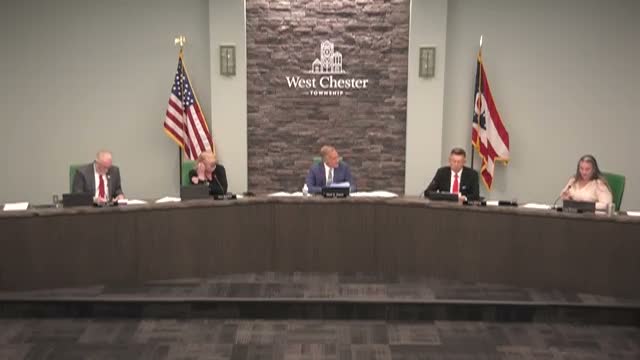
Trustees in West Chester Township on Nov. 18 withheld an emergency declaration for a revised development moratorium after persistent objections from local business owners and a lengthy discussion at the dais.
The chair moved to declare Resolution 34‑2025 an emergency and dispense with a second reading; after public comment and trustee debate the board voted to table the resolution and asked staff to draft narrower language. "I did not thoroughly look into the unintended consequences here," the chair said, adding that the board wanted to "get this right" and might hold a special meeting to finalize changes.
Why it matters: staff introduced the revised moratorium as a corridor pause intended to give the township time to study long‑term land use, traffic circulation and infrastructure needs in the subject area. Under the revision, tenant finishes, exterior alterations and signage would be permitted for existing tenants, but new construction and building expansions that increase building footprints would be prohibited in the study corridor unless exempted.
Business owners and developers urged a narrower approach. "We're staying inside our property, which we've been at for more than 25 years," said Ken Riewa, plant manager at Threebond International, urging exemptions for renovations and modest expansions. Laura Damron, a co‑owner of Alexandria Brewing Company and Bender’s Pub Grub, said a denied tenant‑finish permit jeopardized her plan to open a brewery and restaurant and asked trustees to allow tenant finishes tied to existing tenants.
Several longtime developers pressed for use‑based limits rather than an area‑wide halt. "If it's a specific use that's a concern, that's what zoning's for," said Chris Weinenberg, director of development for Schumacher Dugan Construction, who recommended allowing additions to existing buildings and restricting particular uses instead of imposing a broad moratorium.
Trustees and staff acknowledged the tradeoffs. Lisa Brown, the township administrator, told the board staff had solicited business input and revised the language to preserve occupancy‑related permits; she said the work to draft exemptions for additions or set clear thresholds would require additional drafting. Legal counsel Scott advised that corridor moratoria are a recognized zoning tool but that a different approach would be needed to impose a township‑wide moratorium on specific uses.
Outcome and next steps: rather than declare the resolution an emergency and adopt it immediately, trustees voted to table Resolution 34‑2025 and directed staff to prepare revisions that could exempt modest additions and better target the uses of concern. The board asked staff to pursue a special meeting and said the moratorium’s expiration date on its face would remain October 16, 2026 unless earlier terminated.
The board’s action preserves the moratorium concept while responding to business community concerns and gives staff and trustees time to refine the scope and language.