Get Full Government Meeting Transcripts, Videos, & Alerts Forever!
Get email alerts on the Development Catalyst topic
No spam. Unsubscribe anytime.
West Greeley oversight committee weighs whether to advance ‘Catalyst’ development after staff briefing
Summary
Committee members reviewed market forecasts, why the city pursued a proactive development role and competing studies; staff said the Catalyst package (arena, hotel, water park) was evaluated on its own merits and noted multiple feasibility studies and a pro forma are posted for review.
The West Greeley Citizen Oversight Committee spent its latest session assessing whether the city should move forward with the so‑called Catalyst project — a proposed arena, hotel and water park intended to spur broader development in West Greeley.
Moderator S1 opened the meeting by framing the central question: "tonight is really about the shall we move forward with this project?" Presenter Brett (S5) laid out the origins of the effort, saying the city had shifted from a reactive posture and began proactively engaging developers, including the Water Valley company, to test opportunities and market interest.
Brett presented baseline data for Greeley: population estimates at about 116,000–117,000, roughly 42,000 households and household size near 2.7, then used mid‑range forecasts that add 24,000–32,000 people by 2040 to frame demand assumptions. He described the feasibility work as three parts — market feasibility, development program (unit mix and amenities) and the financial analysis — and stressed the iterative nature of those studies.
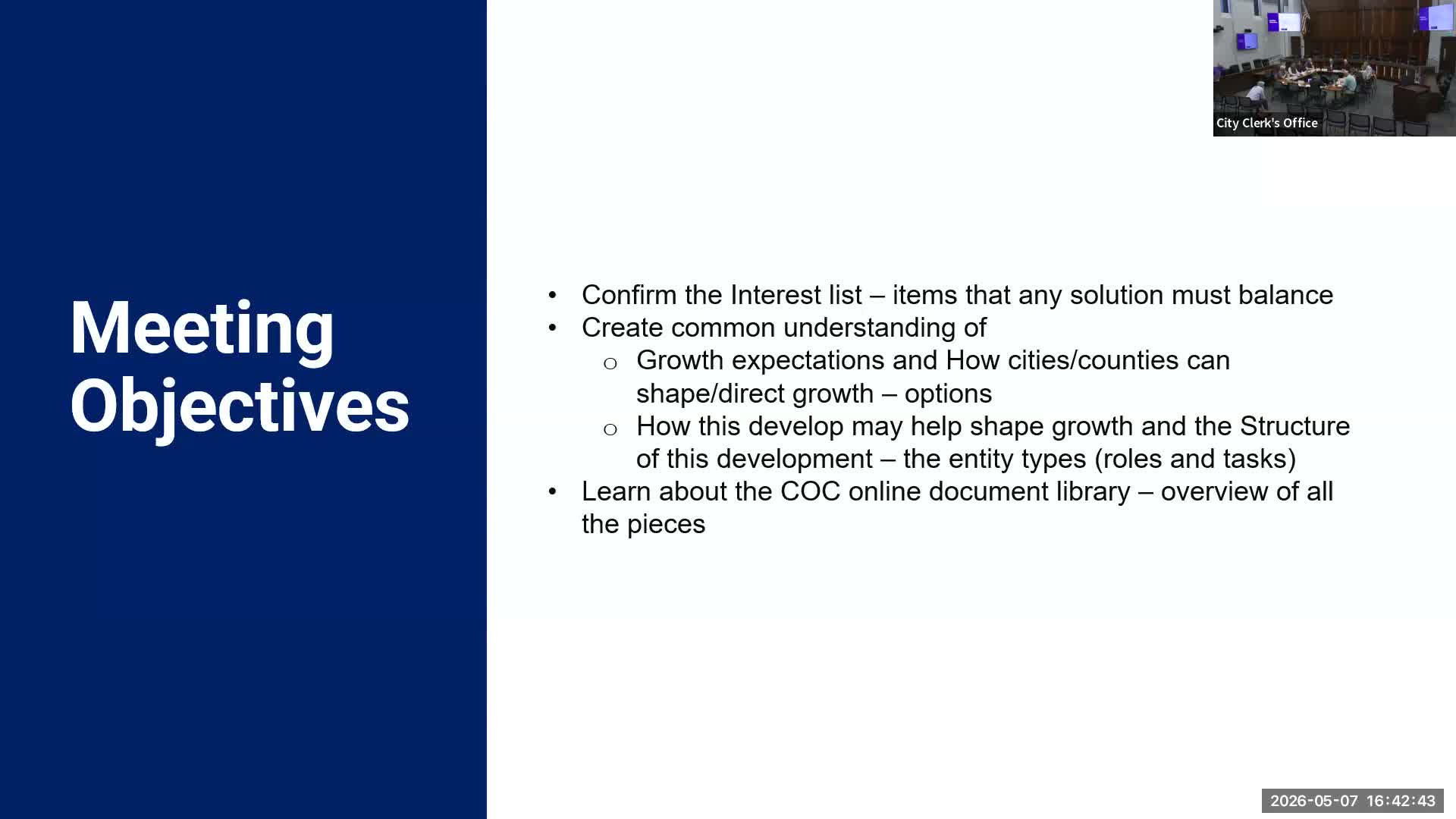
Several committee members said the interest list used to guide evaluation felt too high‑level and recommended clearer, measurable benchmarks. "It feels very visionary," Committee member S11 said, urging the group to make the rubric more actionable. Staff agreed to refine that list and bring a simplified version back to the committee.
Presenters and staff also distinguished the Catalyst project from Cascadia (the larger subarea plan). Staff said the posted documents intentionally analyze Catalyst alone so the committee can judge whether that discrete package is feasible without folding in all related developments.
No formal motion or vote was taken at the meeting. Staff committed to post key documents — the PDSA (predevelopment services agreement), the principal feasibility studies and pro forma materials — ahead of a scheduled finance session so committee members can study the underlying assumptions.