Get Full Government Meeting Transcripts, Videos, & Alerts Forever!
Get email alerts on the Childcare Cost Of Care topic
No spam. Unsubscribe anytime.
Cost-of-care study: consultants say infant/toddler care is most expensive and current subsidies and wages undermine sustainability
Summary
Brodsky Research told Montgomery County council members that provider costs (estimated at roughly $21,000 per infant/toddler in the model and about $14,000 for preschoolers) exceed many current subsidy rates, creating pressure to keep wages low and driving providers to prefer older children.
Montgomery County’s cost‑of‑care presentation at the Nov. 7 joint committee meeting showed that delivering high‑quality infant and toddler care is significantly more expensive than preschool care, and that current revenue mixes and market wages make it difficult for providers to sustain higher quality while paying competitive wages.
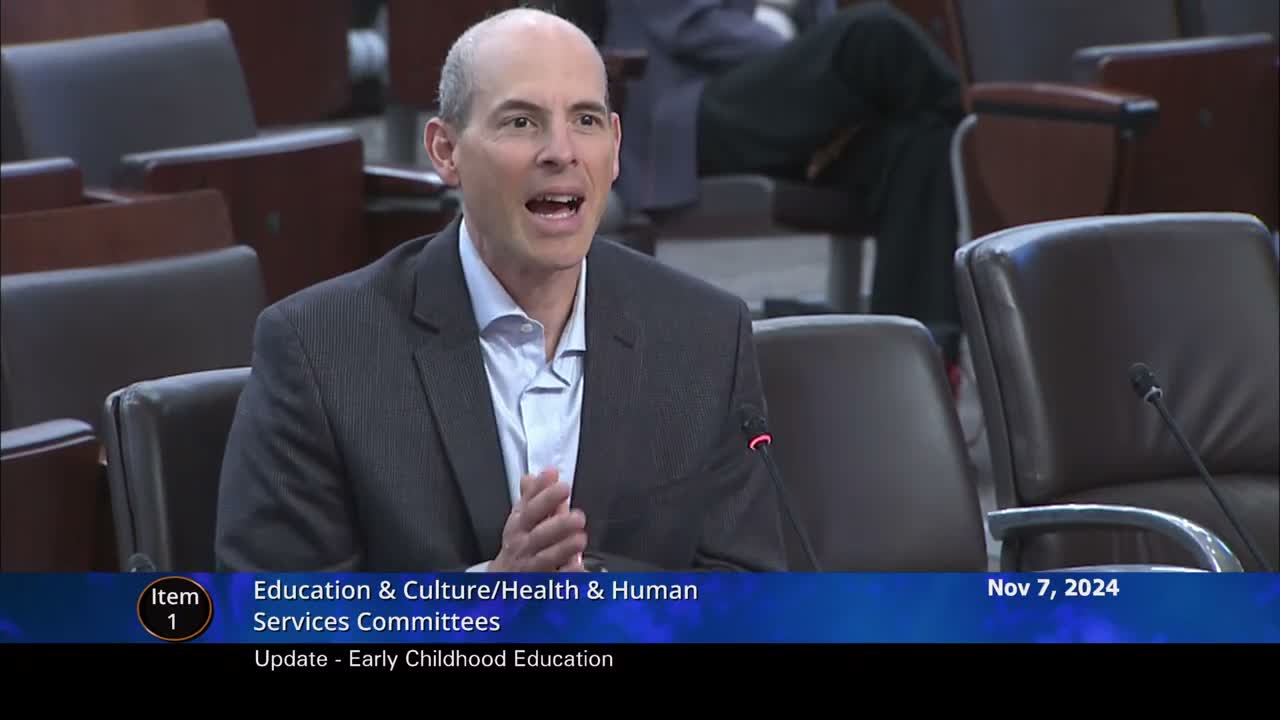
"For a baby or a toddler at the middle level of quality, it's $26,000 a year," Andrew Brodsky, president of Brodsky Research and Consulting, told the committee in an illustrative example. He said a typical center‑model example averaged roughly $21,000 for infants and toddlers and about $14,000 for preschoolers depending on assumptions.
Brodsky explained that personnel costs (teacher and staff wages) account for roughly 80–85 percent of total provider costs and that higher quality requires both more staff per child and higher pay. Under current market wages and revenue mixes, higher wages push many provider business models into negative net revenue. "Achieving parity with public school wages would basically tank the programs," the consultant said.
The presentation compared costs with existing funding streams. Working Parents Assistance (WPA) funding is generally lower than provider needs, the consultant said; state childcare scholarship (CCS) reimbursements are sometimes closer but participation in higher tiers is limited. Brodsky recommended expanding local subsidy and grant funding (including targeted infant/toddler grants such as EquiCare), streamlining enrollment/payment processes to increase subsidy participation, and designing incentives that reward providers who raise wages and enroll subsidy‑eligible children.
County staff and committee members discussed ways to protect infant/toddler seats from conversion to preschool seats and to ensure new funding supports net seat expansion rather than substitution. The presenters and staff said they will share final reports publicly in January and work with stakeholders to convert the studies’ recommendations into an action plan by the end of the fiscal year.
What this means locally: the study frames infant/toddler care as both a quality and a fiscal challenge — it costs more to provide, and current public funding reaches only a fraction of eligible children, limiting providers’ ability to raise wages without additional subsidy funding.