Get Full Government Meeting Transcripts, Videos, & Alerts Forever!
Get email alerts on the Education Calendar topic
No spam. Unsubscribe anytime.
House floor erupts over 4-day school-week bill; multiple amendments and exemptions offered
Summary
A Senate bill to make a five-day instructional week the standard prompted extensive debate. Lawmakers traded concerns about childcare, student nutrition and charter autonomy; multiple parish exemptions were added and a charter-related amendment failed.
The House spent a large portion of its floor session debating Senate Bill 82, a measure from Senator Mizell that would restore a five-day instructional week as the statewide standard while grandfathering districts that already operate four-day schedules.
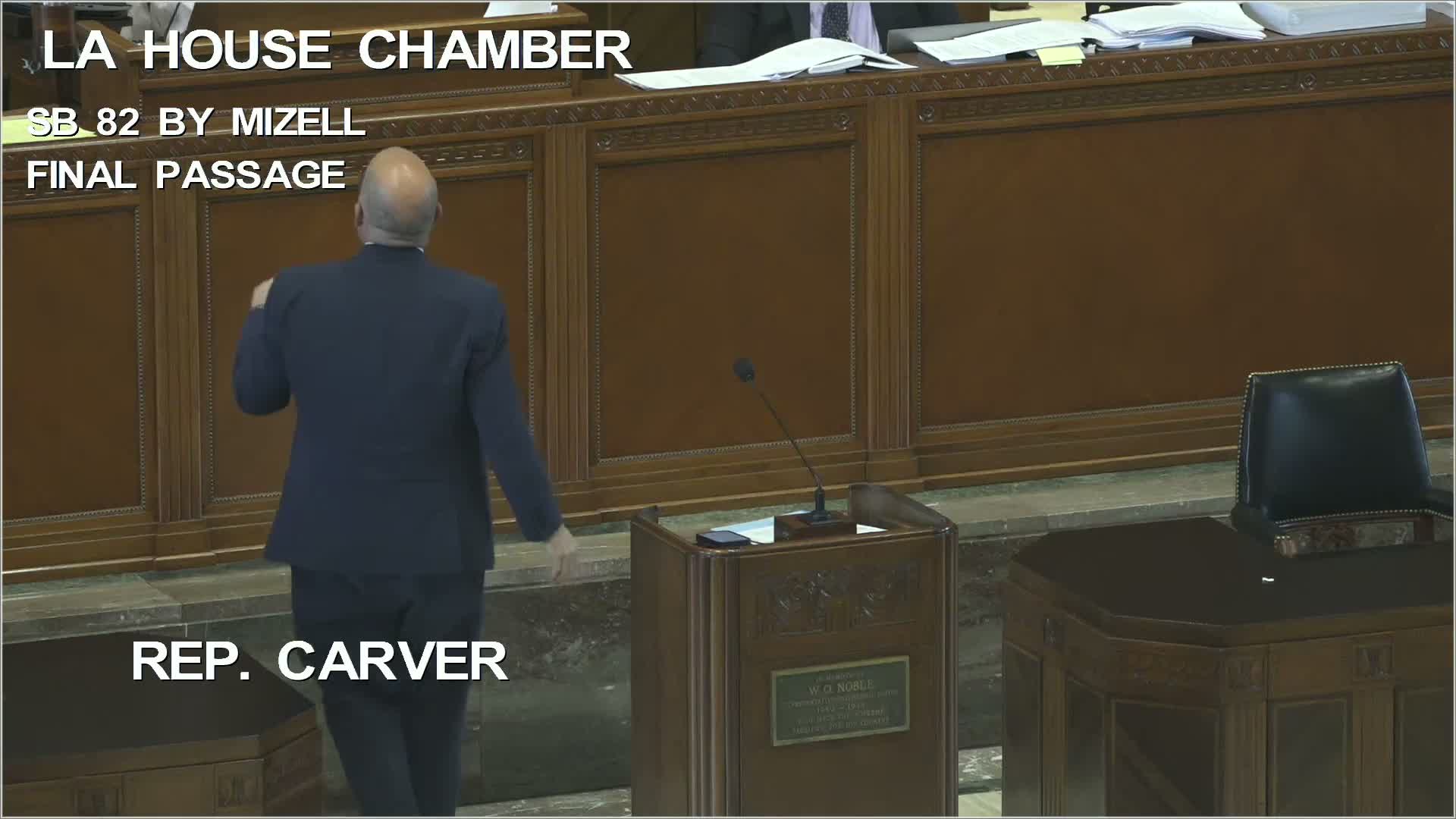
Proponents argued the bill protects instructional time and helps maintain consistency for families and workforce needs. Representative Carver, speaking in favor, said the bill "reestablishes the expectation of a 5 day instructional week" while allowing limited flexibility for high-performing districts and grandfathered four-day districts.
Opponents raised practical concerns. Representatives cited childcare availability, student nutrition and workforce impacts — including teacher recruitment and parental schedules — as reasons the policy merited more study. "When you have a single-parent household and that work day comes around, then a parent is having to find a place for that student to go," one lawmaker said during the debate.
A contentious amendment to require charter schools to follow the same five-day standard failed on a roll call (clerk announced 24 yays, 66 nays). Members then offered and the floor adopted several targeted exemptions to let individual parishes or specific districts remain on 4-day schedules if they already had them in place by the end of 2025. After a series of votes and many amendments, Representative Carver moved to return the bill to the calendar for further consideration (the motion to return the bill carried without objection), preserving time for additional study and negotiation.
The debate drew a high volume of floor amendments and multiple narrow votes to carve out exemptions for parishes including East Feliciana, Pointe Coupee, East/West Baton Rouge and others. Sponsors and opponents agreed the measure touched staffing, student welfare and local control, and several members urged more study before a final statewide mandate.