Get Full Government Meeting Transcripts, Videos, & Alerts Forever!
Get email alerts on the Veterans Funding topic
No spam. Unsubscribe anytime.
House approves annual $500,000 veterans grant fund from lottery proceeds
Summary
The House passed HB 175 to carve $500,000 annually from the Louisiana Lottery's net proceeds into a Veteran Service Grant Fund housed in the Department of Veterans Affairs; sponsors said the grants will support workforce development, mental-health programs and housing services for veterans.
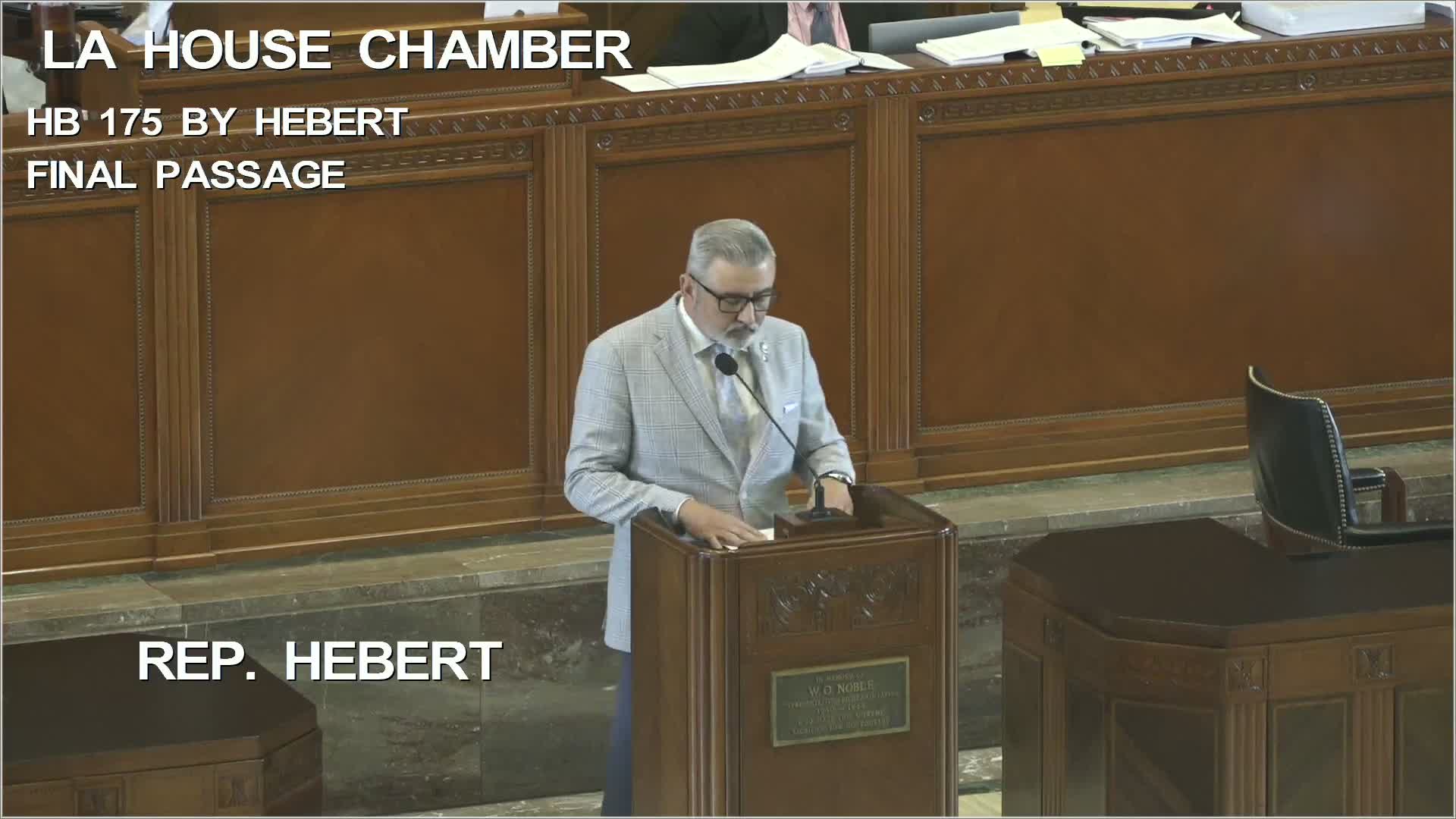
Representative Hebert presented House Bill 175 to create a Veteran Service Grant Fund that would receive $500,000 a year from the net proceeds of the Louisiana Lottery and be administered by a new board in the Department of Veterans Affairs. He said the program is intended to bolster workforce development, suicide-prevention and homelessness-prevention programs for veterans and their families and emphasized the proposed board would include veterans’ organizations and agency designees.
“500,000 of the net proceeds from the Louisiana lottery will go annually into the veteran service grant fund,” Representative Hebert said, describing the fund as "more than just a feel-good bill" and framing it as an economic development step to retain veterans in the state.
During floor questions Representative Freiburg asked about the lottery’s original purpose and whether the carve-out would reduce education funding; Hebert answered that net proceeds — not a fixed percentage — flow to the Minimum Foundation Program (MFP) and that the $500,000 figure is a relatively small share of prior lottery contributions. Representative Phelps pressed whether the grants would be routed through the Department of Veterans Affairs or exclusively to nonprofits; Hebert said the board would be housed at Veterans Affairs and would consider a wide range of eligible applicants, including 501(c)(3) nonprofits, accredited Louisiana colleges, junior ROTC programs and municipal or parish authorities.
Representative Abare offered and the House adopted an amendment clarifying that the statute’s authorization would be effective only with the passage of the bill’s companion constitutional amendment sending the question to voters. On final passage the House recorded 96 yays, 0 nays and the bill passed.
What happens next: HB 175 moves to the Senate and, as the sponsor noted, it has a constitutional-amendment companion that would place the matter before voters if enacted. The text sets annual grants up to $50,000 per eligible recipient and requires the new board to meet and vet applications.
Sources: Floor debate and the roll-call on final passage.