Get Full Government Meeting Transcripts, Videos, & Alerts Forever!
Get email alerts on the Veterans Services topic
No spam. Unsubscribe anytime.
MVAA outlines outreach results, benefit-recovery and county grant changes as members press for details
Summary
Major General Rogers told lawmakers MVAA has 61 staff working with county partners and veteran service officers to connect veterans to benefits—citing 8,000 DD214 requests and $6.7 million recovered for roughly 600 veterans—and described grant-management changes after prior miscalculations for county veteran service funds.
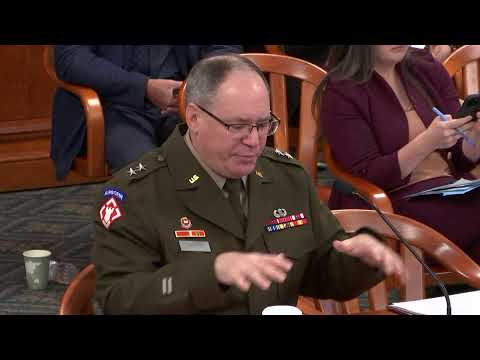
Major General Rogers said the Michigan Veterans Affairs Agency operates with a small central staff—"only 61 folks"—that relies on a network of county administrators and veteran service organizations (VSOs) to reach veterans across the state. He told the committee the resource center handled more than 8,000 DD214 requests last year, a key first step for veterans to prove service and apply for benefits.
Rogers said five MVAA veteran-service officers supported over 600 claims last year and helped recover about $6.7 million in earned benefits for veterans. "Those 61 folks have a network of partners throughout the state," Rogers said, crediting county VSOs and the trust fund established after World War II as an enduring resource for emergency assistance.
Vice Chair Representative Rogers asked whether the governor's recommendation increased funding for the county veteran service fund; General Rogers said funding in the recommendation is consistent with prior years (he cited a figure around $4.255 million), that 51 counties applied for an initial $50,000 increment, and that the department moved grant financial management to the department level to reduce the risk of prior miscommunication that produced shortfalls.
On access programs, Rogers described two recent initiatives: a childcare reimbursement pilot (reimburse up to $60/day per child for drill weekends) launching in April and a TRICARE premium reimbursement option (about $60/month) for members with no other coverage. The department will provide additional documentation and follow up on county-grant allocation pacing and CMS-certification questions the committee raised.