Get Full Government Meeting Transcripts, Videos, & Alerts Forever!
Get email alerts on the Selfridge Investment topic
No spam. Unsubscribe anytime.
State seeks runway fix at Selfridge to secure fighter, tanker missions and unlock nearly $800M in federal construction
Summary
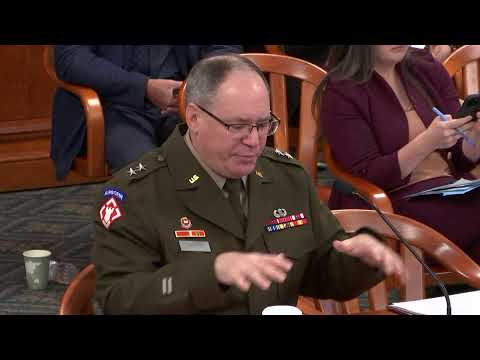
Major General Rogers told the appropriations subcommittee that Michigan has appropriated over $60 million to address encroachment at Selfridge Air National Guard Base and that fixing the runway (an estimated $152M construction need) would enable federal investments—about $800M programmed for hangars and training facilities—and speed fighter and tanker arrivals slated for 2028.
Major General Rogers told the House subcommittee the state has already appropriated more than $60 million to buy parcels and fund design and environmental studies at Selfridge Air National Guard Base to resolve decades-long runway encroachment. He said about $40 million of that appropriation will reimburse Macomb County for road and drainage work that will permit a 1,000-foot northward runway shift and remove homes from a crash-safety zone.
Rogers said the Air Force has about $800 million programmed in the next five years for new hangars, training and simulation centers tied to fighter and tanker missions, but the runway and related infrastructure must be fixed to receive those missions. "If Michigan could step up and pay for the 152 and fix this runway, you could get it done in 2 to 3 years," Rogers said, referring to an estimated $152 million for runway and taxiway construction.
He cautioned the committee the timing is compressed: construction planning, soil preload and drainage work are needed before winter to preserve the 2027 construction season and align aircraft arrival schedules. Rogers and members agreed to follow up with a detailed cost and funding breakdown; Rogers said he would provide a holistic, itemized briefing to the committee staff.
Committee members asked about fiscal exposure if the state paid prior to receiving federal mission commitments; Rogers said federal timelines and presidential direction make mid- to late-2028 aircraft arrival likely and that the state work reduces risk of mission delay.
The subcommittee did not vote on funding at the hearing; Rogers said the department would return with detailed numbers showing already appropriated amounts and outstanding needs.