Get Full Government Meeting Transcripts, Videos, & Alerts Forever!
Get email alerts on the Dmva Budget topic
No spam. Unsubscribe anytime.
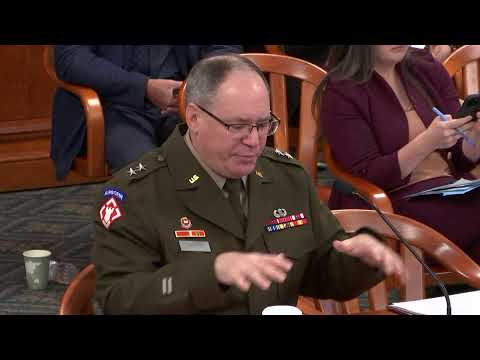
Major General outlines governor's budget request for Michigan military and veterans programs, says state funds leverage larger federal returns
Summary
Major General Rogers told the House appropriations subcommittee the Department of Military and Veterans Affairs costs the state roughly $100 million annually but produces about $1 billion in economic activity and drives billions in federal reimbursements; he summarized the governor's recommendations and the department's priorities.
Major General Rogers, presenting to the House Appropriations Subcommittee on Military and Veterans Affairs, said the Michigan Department of Military and Veterans Affairs (DMVA) requires roughly $90–96 million from the state general fund and additional state moneys to support operations that Rogers said generate far larger federal and local returns. "You're spending 100 million a year and you're getting a billion dollar return on that investment," Rogers said.
Rogers described the department's mission as a lifelong commitment to service members, from active duty through post-service supports such as skilled-nursing beds and funeral honors. He said Michigan has about 486,000 veterans and estimated only about 28% currently receive veterans' benefits, a gap the Michigan Veterans Affairs Agency (MVAA) and partners are working to close.
The general highlighted that much of the department's spending is federally reimbursed, which increases the state's overall return: beyond personnel and operating costs the department's activities generate local spending and attract federal dollars tied to CMS-certified veteran homes, training events and reimbursements.
Rogers also reviewed personnel-support programs: a statewide tuition-assistance benefit the department administers that has supported more than 7,000 service members over time and a recent expansion allowing dependents to use earned benefits. He described a new childcare reimbursement program that will reimburse up to $60 per day per child for service members on drill weekends and a TRICARE premium reimbursement (about $60 per month) for members without civilian coverage to bridge gaps in care.
Members asked for more detail on specific line items and programs; Rogers said his slides contained summary figures and offered to follow up with supplemental materials, and he paused his presentation to reserve time for committee questions.